


The Oaklands
About The Property
Some buildings shout. Others whisper — and reward those who stop to listen.
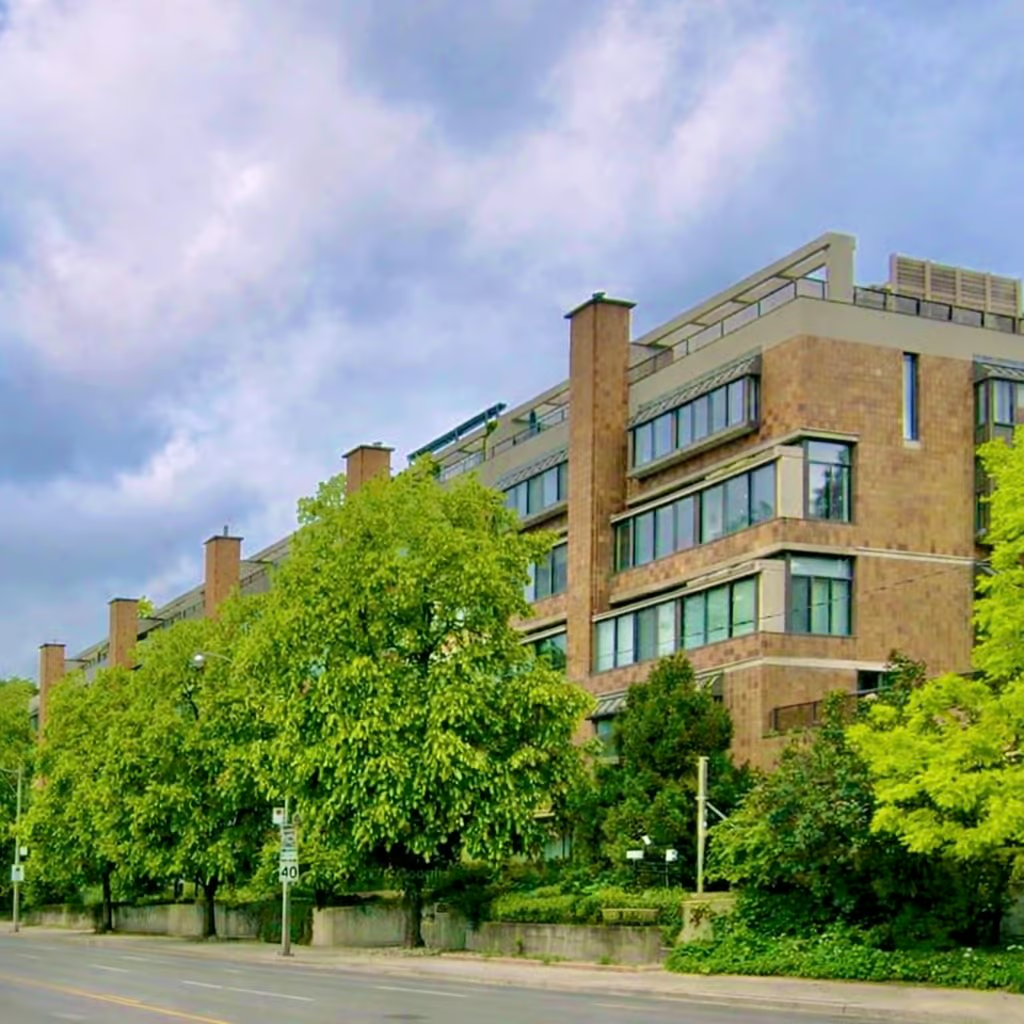
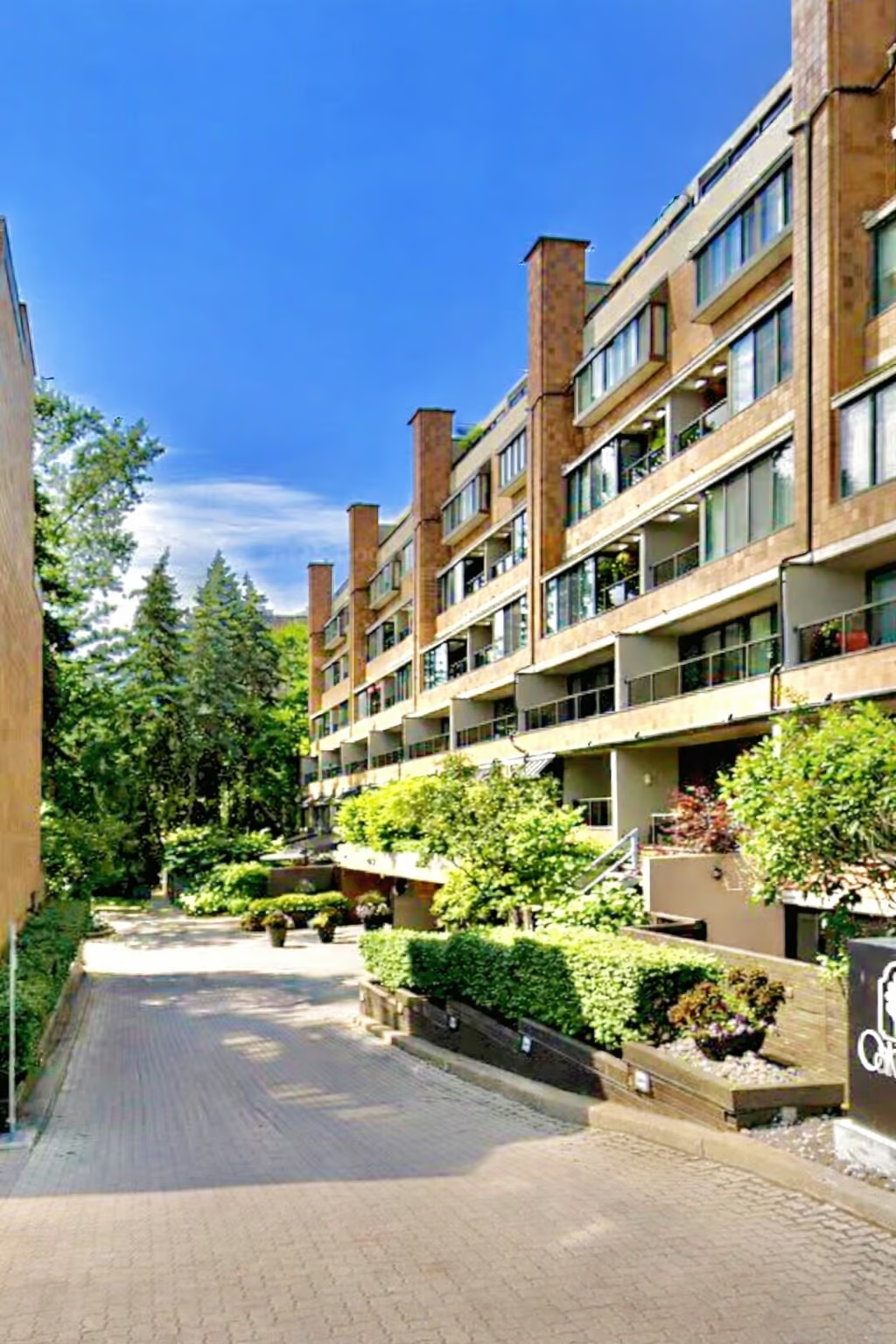
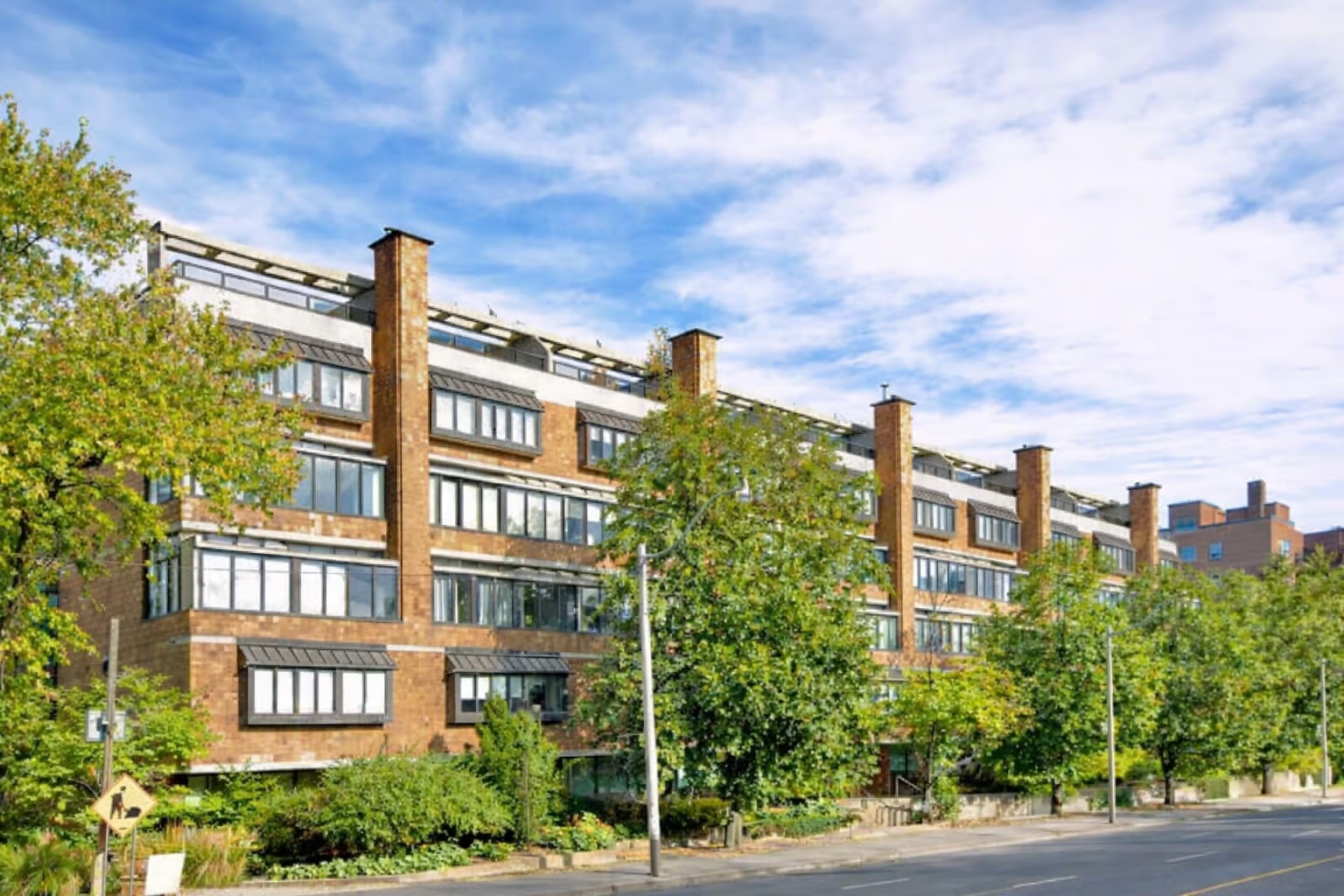
The Oaklands is firmly in the latter category. Tucked quietly behind mature trees just west of Avenue Road, this low-rise condominium complex has a way of catching your eye without ever trying too hard. You may walk past it dozens of times before realizing that it isn’t merely different — it is deeply considered. And once you’ve been inside, it’s very difficult to forget.
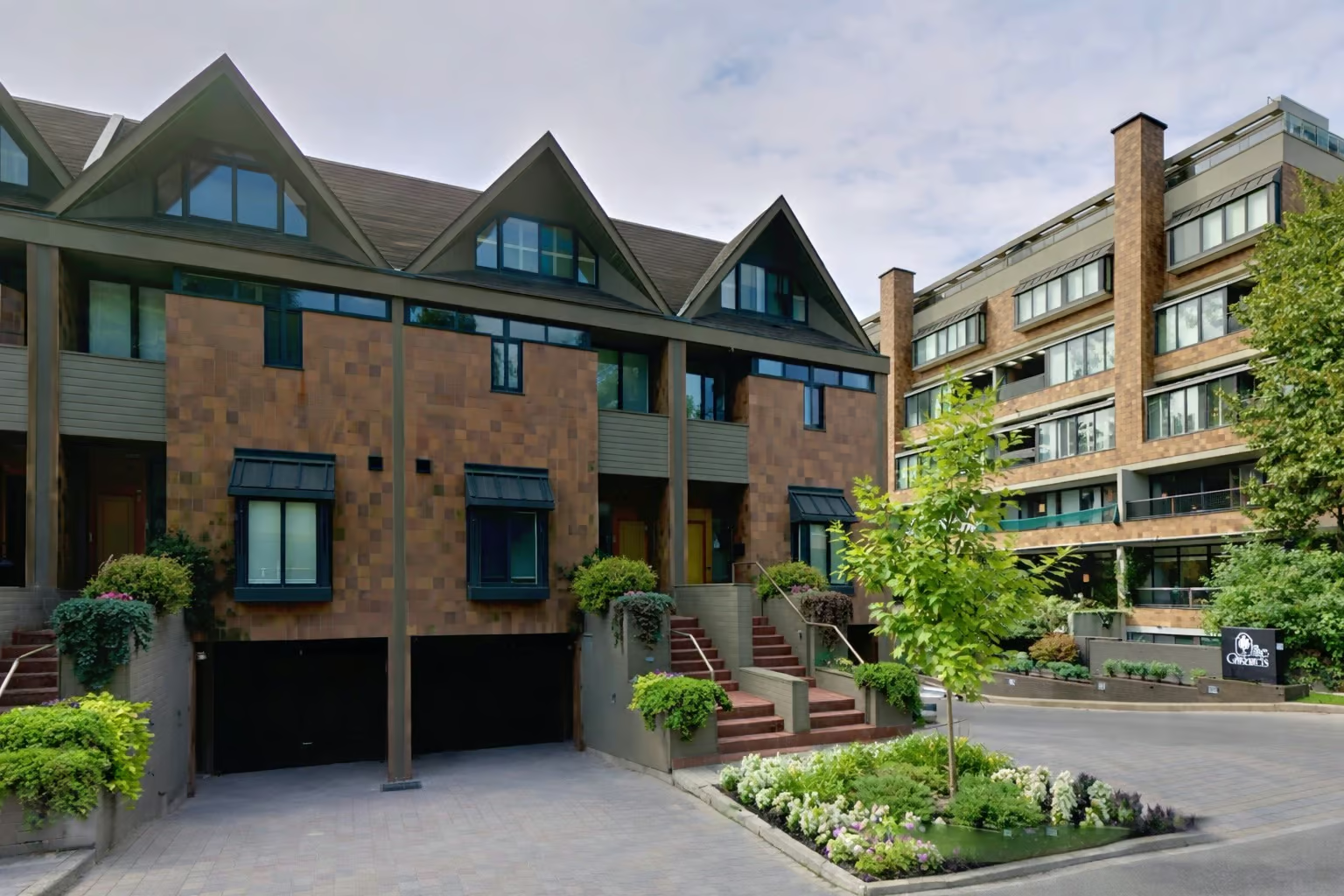
Completed in the early 1980s, The Oaklands is one of Toronto’s most thoughtful residential experiments: part condominium, part townhouse enclave, and part architectural meditation on how people actually like to live.
Share This Guide
Property Details
A Pedestrian Street in the Sky
One of the great pleasures of The Oaklands reveals itself not at the front door, but within. Rather than long, anonymous interior corridors, the building is organized around a broad third-floor internal promenade — a kind of elevated pedestrian street.
Skylights bring daylight down through the heart of the complex. Trees are planted along the route. Suites are accessed via gentle steps, stoops, and small landings. Some windows even look inward, creating a subtle streetscape effect — neighbours passing, light changing, seasons marking time. It’s part village lane, part European courtyard, and entirely unlike conventional condominium circulation.
Anchoring the development are a series of substantial townhouse units that give the project weight and scale at ground level, helping it sit comfortably among the surrounding houses rather than feeling imposed upon them.
It is, quite simply, a building designed to be walked through, not rushed past.
The Suites: Space, Light, and Outdoor Living
Homes at The Oaklands range widely in size and character — another reason the building has aged so gracefully. Smaller studio and one-bedroom suites begin around the mid-500 square foot range, while the largest three-bedroom-plus-den residences stretch well beyond 2,000 square feet, some unfolding over multiple levels.
What unites them is volume, light, and a sense of generosity that is increasingly rare in modern construction. Windows are abundant and thoughtfully placed. Many suites enjoy long, linear balconies, rooftop terraces, or — in a couple of exceptional cases — expansive private gardens that feel more like urban courtyards than condominium amenities.
Interiors vary, as you’d expect in a building of this vintage. Some suites have been beautifully modernized; others remain ripe for a more personal re-imagining. Fireplaces appear in select units, wood-burning or gas depending on the suite, and layouts tend to prioritize livability over trend.
This is a building that wears renovation well — and invites it, rather than fighting it.
A Word About the Architect: Macy DuBois
The Oaklands is the only significant residential project designed by Macy DuBois — and that alone makes it notable.
DuBois trained at Harvard’s Graduate School of Design and settled in Toronto after being shortlisted for the original City Hall competition. His career would go on to include some of Canada’s most important postwar buildings: New College at the University of Toronto, the Central Technical School Arts Centre, large portions of Lakehead University, and perhaps most famously, the Ontario Pavilion at Expo 67 — a daring, fabric-based structure that was as controversial as it was celebrated.
Influenced by Alvar Aalto, Louis Kahn, and Frank Lloyd Wright, DuBois believed modern architecture should temper ambition with humanity. He was deeply interested in scale, climate, and how buildings feel across seasons. When told exposed concrete wouldn’t work in Canada, he proved otherwise. When budgets were limited, he extracted value through spatial intelligence rather than ornament.
The Oaklands earned him a Governor General’s Award in Architecture in 1983, with the jury praising the calm of its interior street, its sensitivity to surroundings, and the remarkable livability achieved within a modest budget.
It remains a fitting summary of his philosophy.
The Neighbourhood: Quietly Connected
Oaklands Avenue sits in that sweet midtown pocket where residential calm and urban convenience coexist comfortably. St. Clair Avenue West lies just to the north, offering groceries, daily errands, and easy transit. Yonge Street — with its cafés, shops, and services — is a short walk east.
And then there’s Scaramouche. Discreetly tucked away and consistently among Toronto’s most respected dining rooms, it’s only a few minutes on foot — one of those delightful neighbourhood secrets that never quite loses its charm.
Despite the tranquillity, you are never far from movement.
Getting Around
Summerhill Station on the Yonge subway line is roughly an eight-minute walk, while Dupont Station on the University–Spadina line is reachable in about fifteen. Avenue Road provides a direct north–south route for drivers, connecting quickly to the 401 or downtown via University Avenue.
It’s a location that works equally well whether you’re walking, driving, or leaving the car behind altogether.
Final Thoughts
The Oaklands is not a building for everyone — and that is precisely its strength.
It rewards those who value space over spectacle, planning over polish, and architecture that reveals itself slowly. It has aged not by standing still, but by remaining relevant. In a city that often rushes toward the new, The Oaklands reminds us that good ideas — properly executed — rarely go out of style.
If you know, you know. And if you don’t yet — this may be one worth getting to know.
A Personal Aside
On a more personal note, The Oaklands is a building I’ve always enjoyed showing. Over the years, I’ve occasionally suggested it to clients who thought they were looking for something entirely different — newer, flashier, or more conventional. More than once, I’ve gently detoured them here “just to see it,” knowing full well that the experience might shift their perspective.
In a particular case, it did exactly that. They immediately understood the appeal, embraced the space, and went on to undertake thoughtful, complete transformations of their suite after I guided them successfully through a multiple offers situation. Years later, they remain happily there — deeply appreciative not only of their home, but of the quiet sense of community the building fosters. It’s one of those places that doesn’t merely house people; it seems to reward them for choosing it.
On the hunt for the perfect Toronto home? Get in touch via the form on this page or by calling me or emailing me directly.