



And how a quiet valley became one of Toronto’s most enchanting neighbourhoods
There are certain neighbourhood names in Toronto that sound as though they were coined in a marketing boardroom—polished, predictable, and entirely forgettable. Hoggs Hollow is not one of them.
It’s a name that raises an eyebrow the first time you hear it. Slightly rustic. A touch mysterious. And, as it turns out, entirely rooted in the geography and personalities that shaped this particular stretch of the Don Valley.
So why is it called Hoggs Hollow?
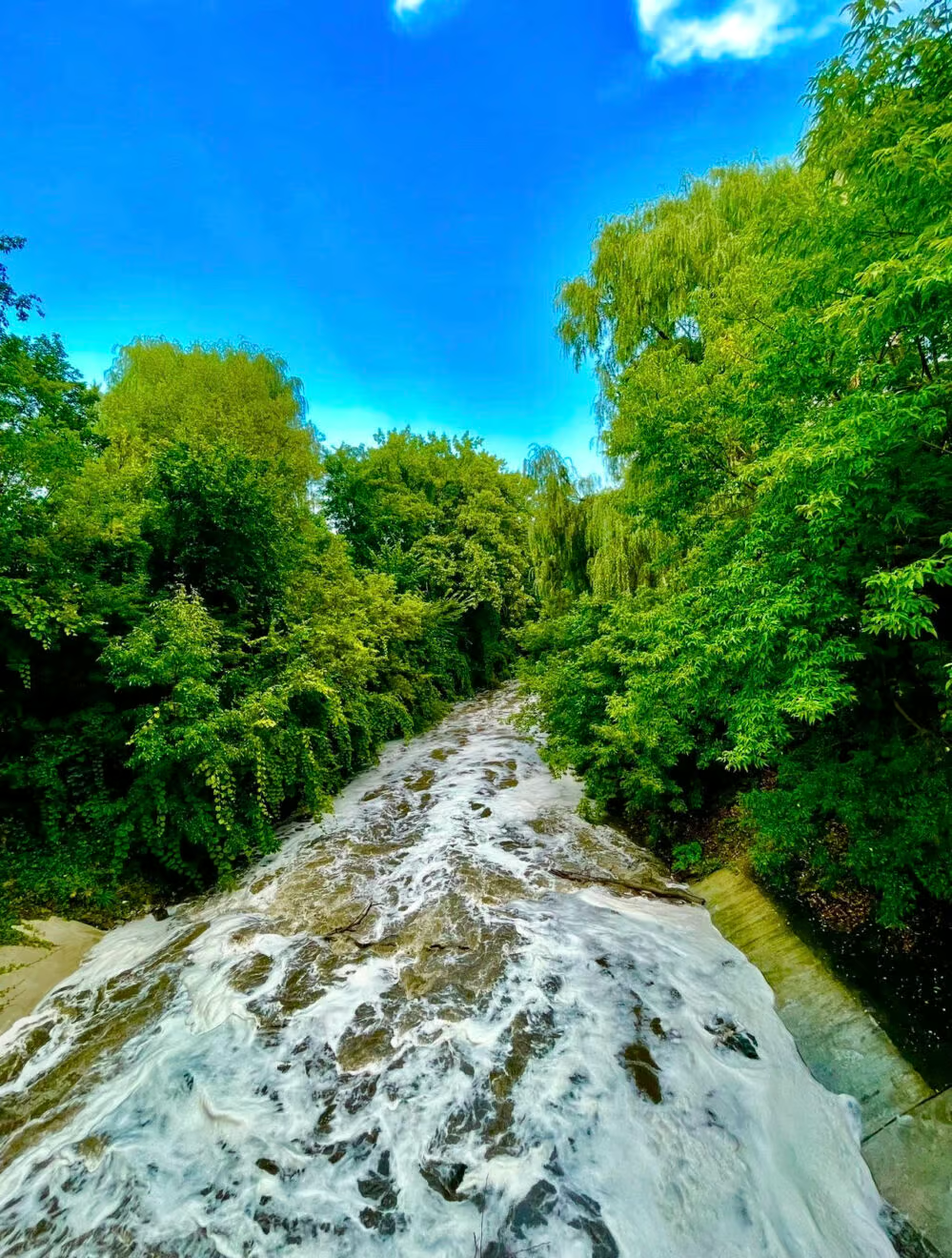
The “Hogg” in Hoggs Hollow refers to James Hogg, a Scottish settler who arrived in the area in the 1820s and established both a grist mill and a whisky distillery along the Don River. By most accounts, he was one of the more successful millers in the valley, drawn, like others of the time, to the reliable power source the river provided. What began as a working landscape, part industry, part agriculture, slowly took on a more permanent identity as families settled and small community structures began to emerge.
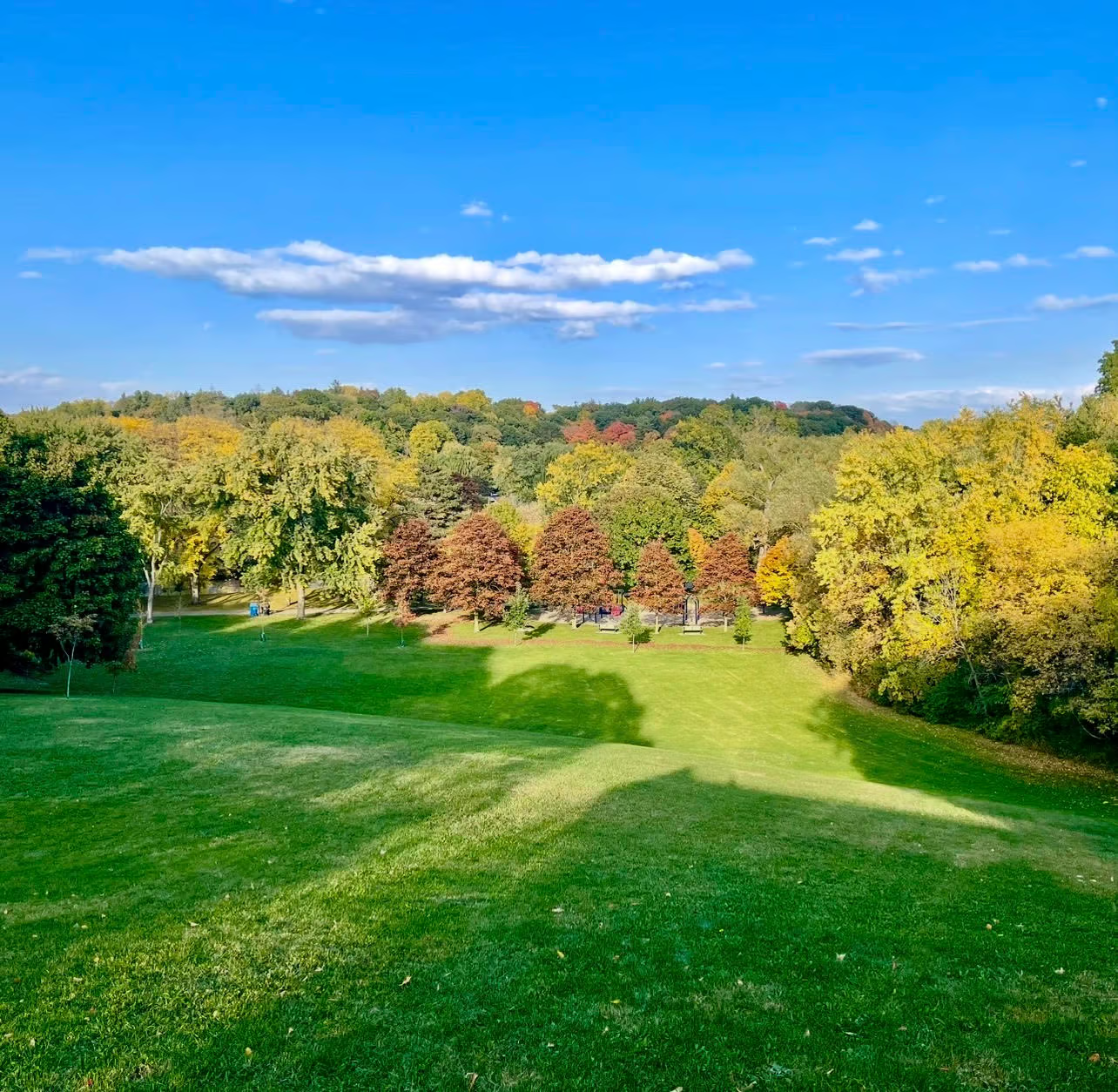
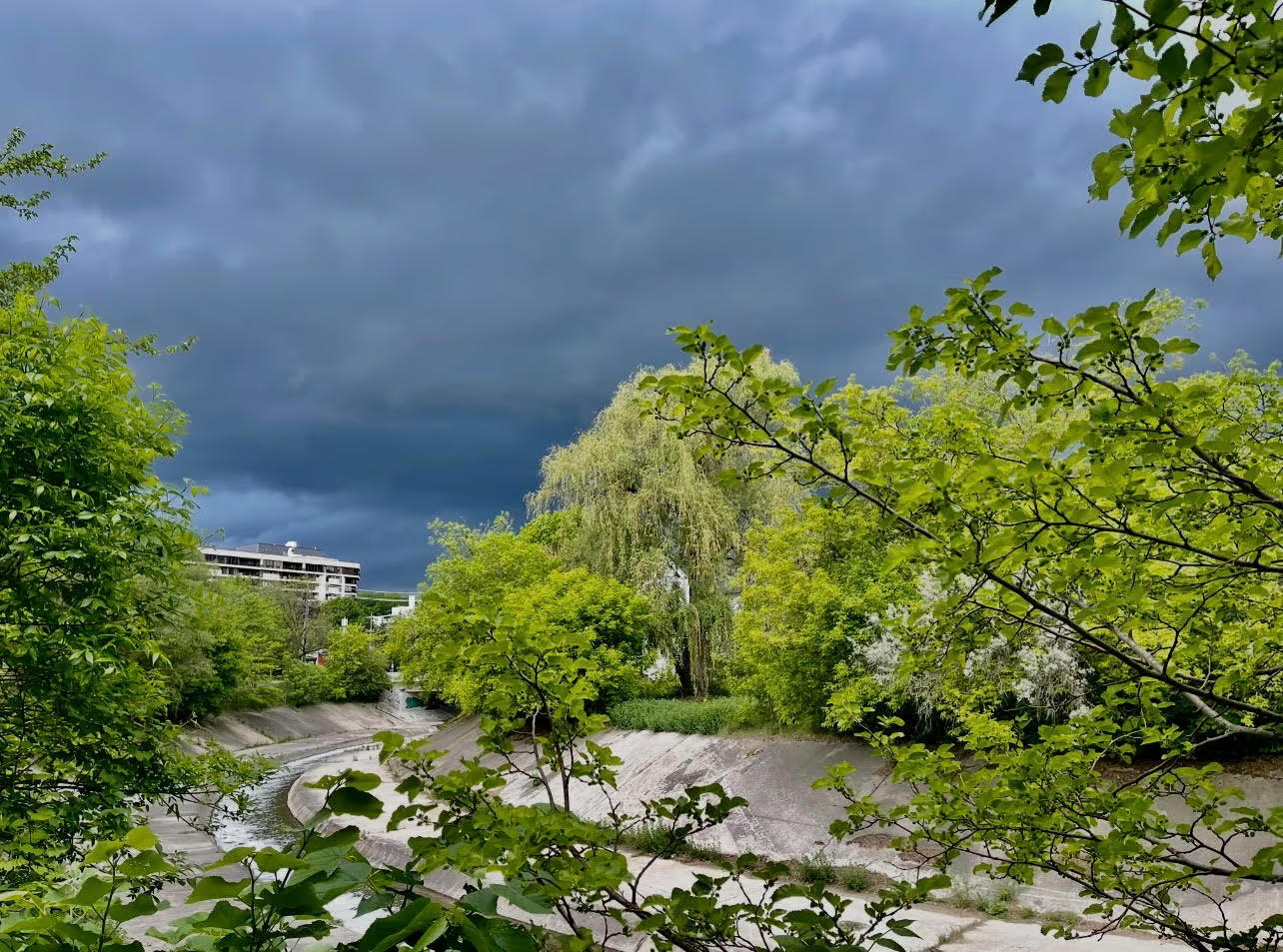
The “hollow” is just as important. It speaks to the land itself—the dip, the enclosure, the sense of being tucked away from the city above. Even now, as you descend into Hoggs Hollow, there’s a subtle shift. The noise softens. The roads curve. The trees close in slightly, as though the neighbourhood is gently folding around you.
Get an even closer look at the area by reading Hoggs Hollow: The Complete Neighbourhood Guide
A History of Hoggs Hollow
That geography did more than shape a name—it defined how the area would evolve.
In 1856, James Hogg’s sons subdivided the family’s estate into a series of residential lots, though development was anything but immediate. The land itself, marked by swamps, quicksand, and uneven terrain, was not particularly cooperative. As a result, Hoggs Hollow developed slowly, with only a handful of early settlers establishing homes alongside a modest but complete village structure: a school, a post office, a blacksmith, a church, and even early recreational uses, all serving a community largely made up of Scottish, Irish, and English immigrants.
For much of its early life, Hoggs Hollow remained somewhat separate from the city’s more formal grid. It wasn’t an obvious place to build en masse, nor was it particularly convenient in the way flatter land tends to be. And so, rather than being carved up quickly and uniformly, it developed slowly, in pieces, over decades.
At one point, the streetcar line ran right up to the top of the Hollow, terminating at what was aptly known as “the City Limits.” It marked, quite literally, the edge of Toronto as most people understood it at the time. That sense of being just beyond the city, yet tied to it, has always been part of the area’s identity. The streetcar eventually disappeared when the subway was extended into the valley in the mid-1970s, bringing with it a new kind of connectivity without quite disturbing the neighbourhood’s tucked-away feel.
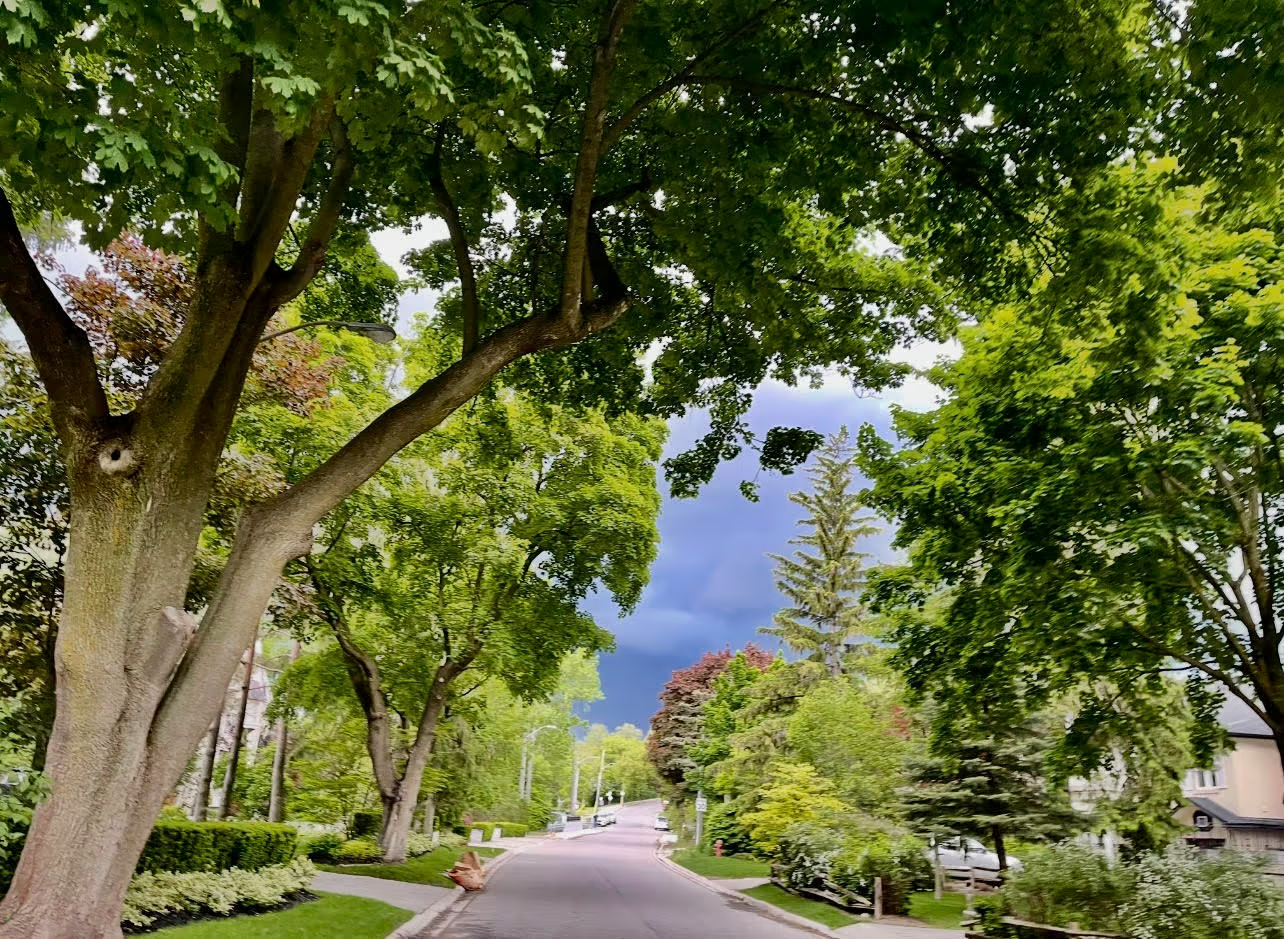
By the early 20th century, the area began to shift again—this time toward a more deliberate residential vision. Roads were laid out, lots refined, and homes designed with a certain English countryside sensibility, reflecting both the heritage of its early residents and the aspirations of a growing city.
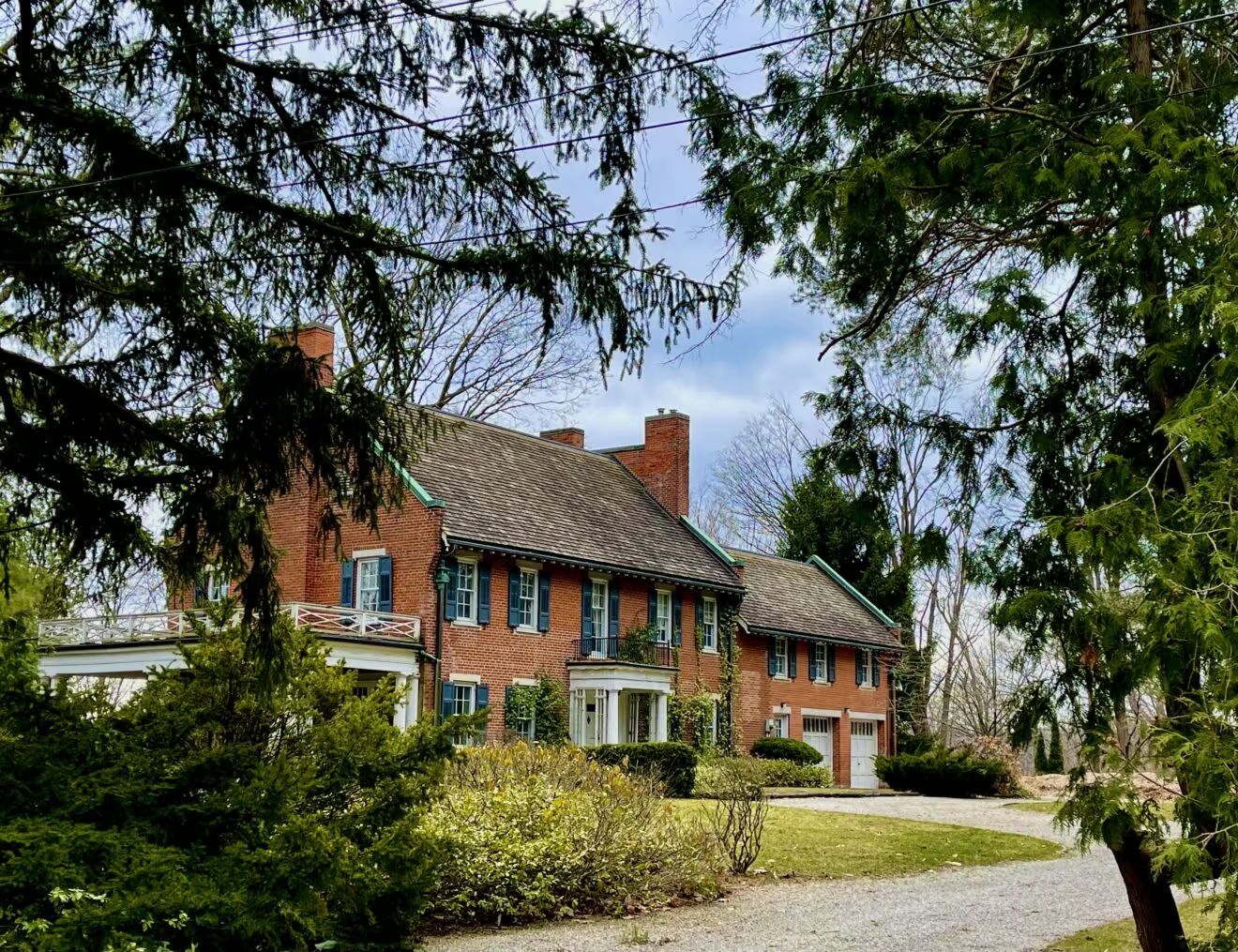
By the mid-20th century, as Toronto expanded and prosperity grew, the valley began to attract a different kind of attention. Larger lots, mature trees, and a sense of quiet seclusion, yet still within reach of the city, made it an ideal setting for custom homes. Architects, builders, and forward-thinking homeowners began to shape the neighbourhood in a more intentional way, often responding directly to the land rather than imposing upon it.
That legacy is still visible today.
Discover The Most Interesting Homes in Hoggs Hollow next.
Flash Forward: Modern-Day Hoggs Hollow
Hoggs Hollow is not a neighbourhood of repetition. It is a neighbourhood of response—each house, each street, each view shaped by what was already there. The curves of the roads follow the contours of the land. The houses sit within the landscape rather than atop it. And the feeling of being “set apart,” while still entirely connected, remains one of its defining qualities.
The name, in the end, feels entirely appropriate.
A little grounded. A little storied. And far more meaningful than it first appears.
And, as it turns out, that history doesn’t just sit in the past—it quietly informs what it’s like to live here today.
Looking for a real estate agent with a history in Hoggs Hollow? I’d be happy to share my expertise. Get in touch via the form on this page or by giving me a call or emailing me directly.
Find Your Life of Luxury
Whether buying or selling a home, I can help you find your life of luxury. Get started today.