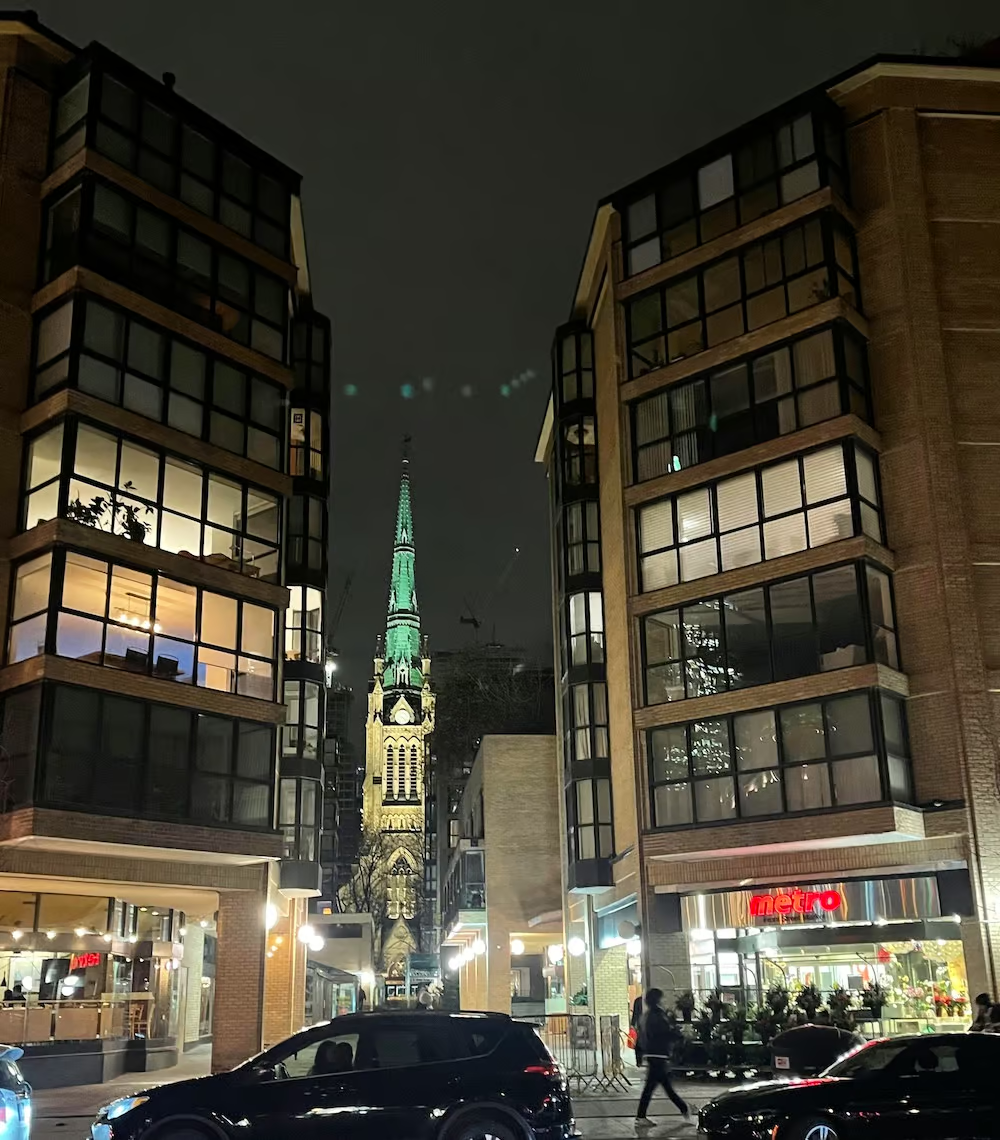




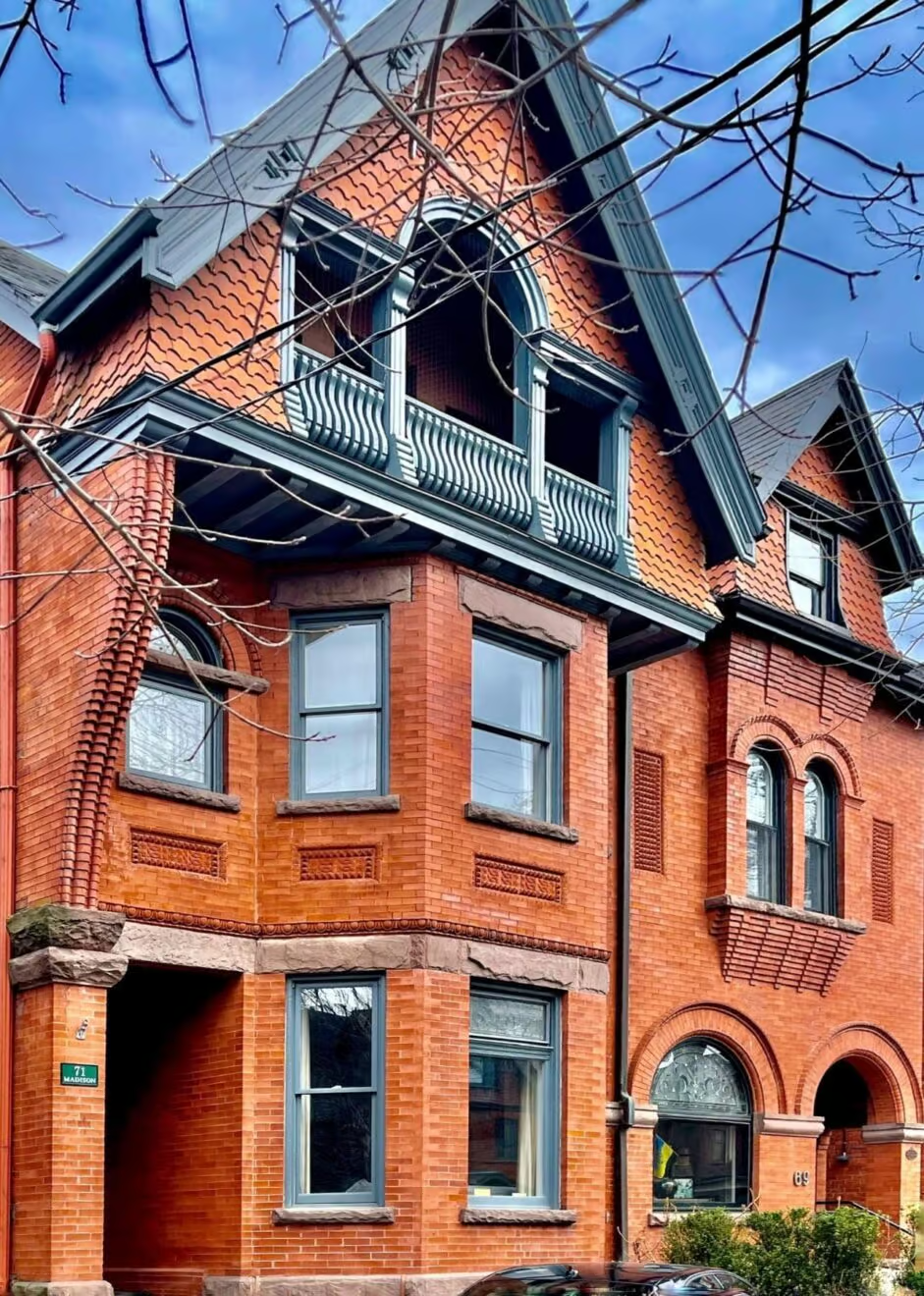
Preserving a sense of place has always been at the heart of great architecture—and great real estate. I grew up in Toronto’s Annex, at a time when the neighbourhood was already mourning losses that few acknowledged formally: the demolition of stately homes along St. George Street and Walmer Road during the late 1950s and early ’60s to make way for apartment buildings. Some of those projects were pragmatic and well intentioned, but with them, the romance of the streetscape suffered. The rhythm was broken. Beautiful mansions were not reimagined—they were simply removed.
That era of erasure is exactly why heritage now exists: because once historic character is gone, it cannot be recreated with any real authenticity. Today, the Ontario Heritage Act and the City of Toronto Heritage Register are among the most important tools available to safeguard what is left of our architectural past—especially in residential neighbourhoods. And if you’re thinking of buying, renovating, or selling a heritage or heritage-listed home, understanding the basics is essential not only for compliance but for protecting its long-term value. Urban fabric that’s lived through generations has value beyond beauty—it anchors culture and identity.
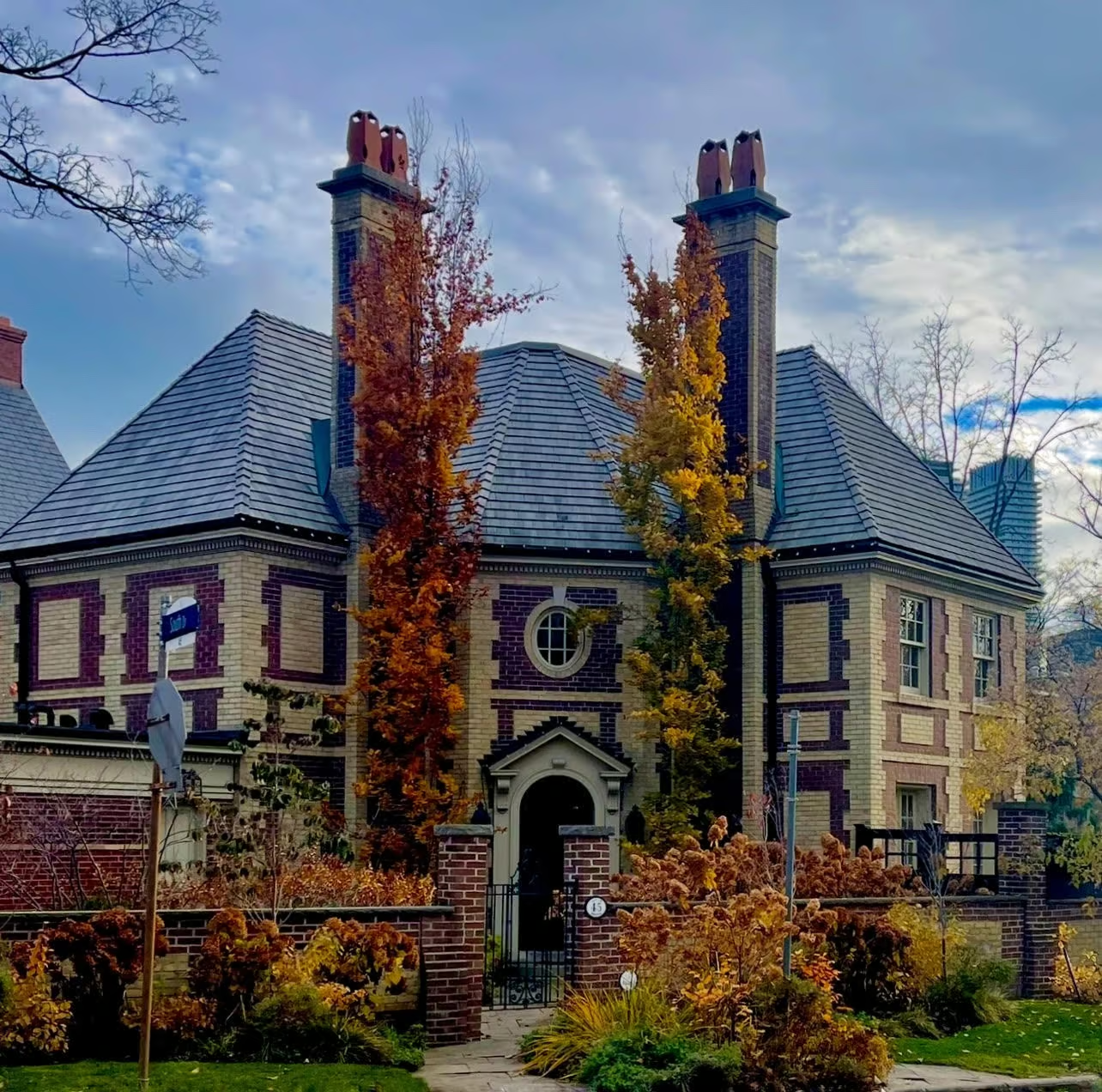
Do you love old and unique homes in Toronto? Here are a few more posts you might enjoy:
- Is it Wrong to Like Older Condo Buildings in Toronto? Or are they Actually Better?
- Lasting Quality in Toronto Homes: Features to Look For
- What Homeowners Need to Know About Toronto’s Unique Architectural History
- They Don’t Build Them Like They Used To: Pros and Cons of Modern Homes
Historic vs. Heritage: Yes, There’s a Difference
Many older homes are described as historic, but that doesn’t automatically make them heritage.
A historic home may simply be old, culturally significant, or architecturally notable. A heritage home, on the other hand, is officially recognized under the Ontario Heritage Act.
- Listed on the Heritage Register (City of Toronto)
- This indicates the city considers the building significant. Demolition may be delayed for up to 60 days while further review takes place, but renovation approvals are generally not required.
- Designated under the Ontario Heritage Act
- This carries legal protection. Changes to defined heritage attributes—usually exterior elements—require city approval. In rare cases, interior features may also be protected.
There is no strict age threshold for designation, though in Toronto, most heritage homes date from the late 19th to early 20th century. Increasingly, mid-century modern examples are also being recognized.
Looking for inspiration? Tour the spectacular mid-century modern Roy O. Allen House in New York State here.
Exterior vs Interior Protection
One of the most common misconceptions is that heritage protection extends inside the home.
In most cases only the exterior elements and the contribution to the streetscape are protected. The interior can often be modernised, provided the updates are thoughtful. Still, a heritage home stripped entirely of its interior charm loses part of its essence. There is value—both emotional and financial—in retaining details where sensible.
Neighbourhoods Leading Heritage Stewardship
Several Toronto neighbourhoods have mastered this balance:
- Rosedale remains the benchmark for preservation. Much of its elegance stems from strict heritage oversight paired with engaged homeowners.
- The Annex, and the neighbourhoods to the south of Bloor and also west around Bathurst/Palmerston, showcase how Edwardian and Victorian homes can be adapted for contemporary living while maintaining character.
- Hazelton Avenue is perhaps Toronto’s most fascinating example of subtle preservation—modest in scale, enormous in respect. My mother recalls selling homes there for $13,000 in the height of the hippie era. Today, it is arguably the highest-priced street in the city on a per-square-foot basis.
- Cabbagetown demonstrates the power of community-aligned preservation, where residents collaborate to protect detail and continuity.
Heritage done well does not stifle change—it guides it.
Learn more about Toronto’s most covetable communities with these posts next:
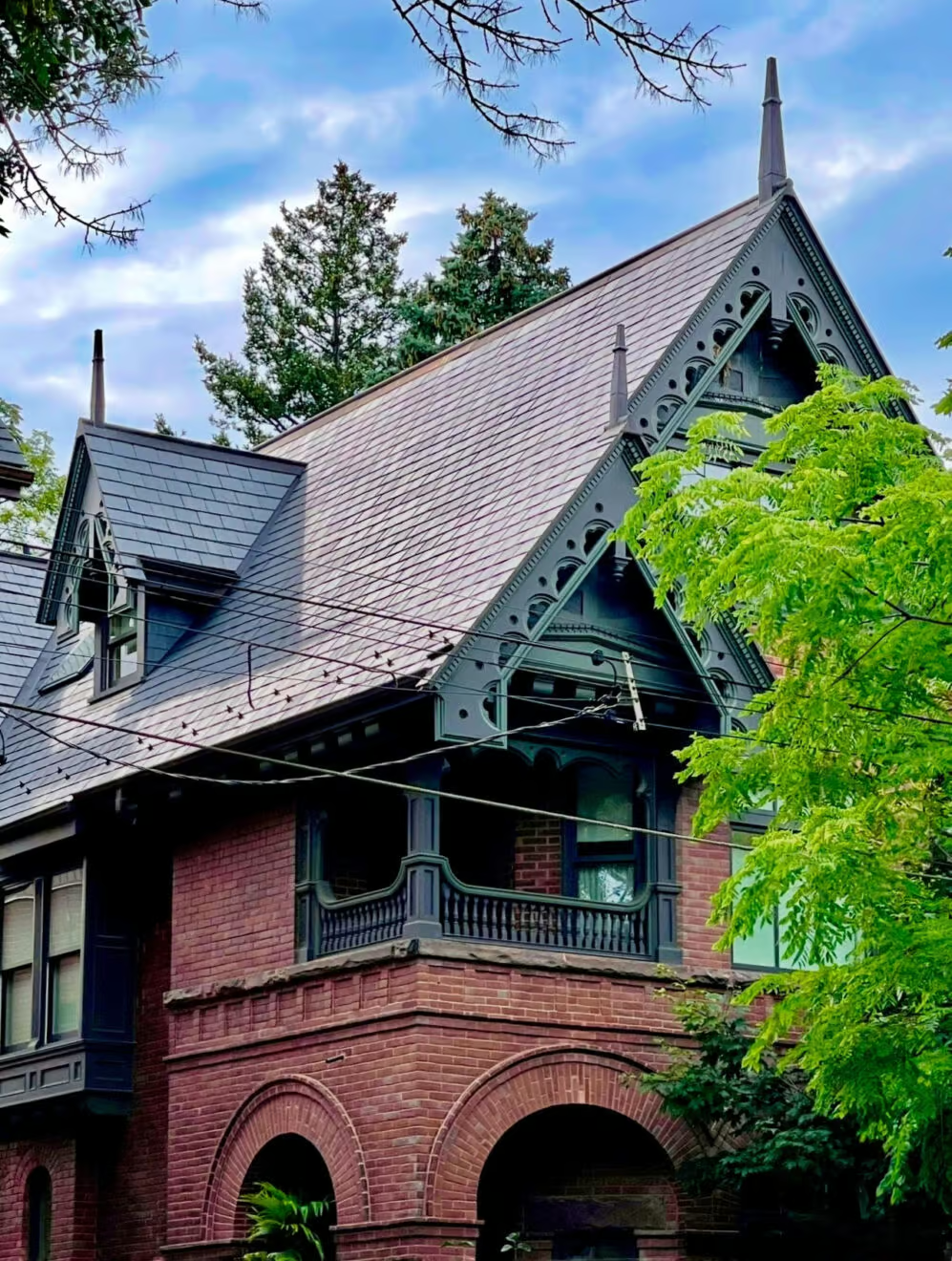
What About Property Value?
There is a persistent belief that heritage designation limits value. In fact, the opposite is often true.
The most profitable homes are frequently those allowed to age gracefully.
Authenticity is increasingly prized, particularly in established, walkable neighbourhoods near amenities and transit. In an era of generic development, heritage homes stand out. They offer narrative, craftsmanship, and cultural continuity.
Selling an older, unique home is a bit different than selling a modern property. Read this blog for a Complete Guide to Selling an Older Home in Toronto.
Where Toronto Gets It Right (and Where It Doesn’t)
Residential heritage stewardship in Toronto has been largely successful. Commercial corridors, however, have not fared as well.
Large retail podiums along Yonge Street and parts of Bloor Street rarely get subdivided into the smaller storefronts that once brought character and commerce. Contrast that with European cities—or even parts of the U.S.—where scale is carefully managed to encourage walkability, heritage-compatible rhythm, and small-scale businesses.
I still recall when Bloor Street’s Mink Mile offered not just luxury retail, but cafés, cinemas, dessert bars, casual dining and evening venues. Today, large footprints dominate, and while refined, they lack memory.
When it comes to Toronto condos, there’s a lot to say. Some good, some bad, and some ugly. For an architect’s perspective on Toronto condos, check out my Condo Chronicles series. Here are a few posts you might enjoy:
- Reflections of Yorkville’s Changing Landscape
- Reimagining 110 Bloor Street West: Elegance, Logic, and a Touch of Drama
- Reworking the Residences of 488 University Avenue
Checklist for Homeowners: Considering Buying or Selling a Heritage Property
✔ Check the City of Toronto Heritage Register early (don’t assume it’s been done).
✔ Determine whether the property is listed or designated.
✔ If designated, budget for heritage permit approvals for any exterior changes.
✔ Investigate potential grants or tax relief for restoration work.
✔ Engage an architect and a realtor familiar with heritage sensitivities.
✔ Understand that thoughtful renovation usually enhances value—not diminishes it.
Why Heritage Still Matters
Heritage, at its core, is not about preventing transformation. It is about ensuring that evolution builds upon what came before. Toronto will continue to densify—rightly so—but our best neighbourhoods need not sacrifice identity in the process.
“Heritage isn’t about stopping change—it’s about ensuring it improves upon what came before.”
– Robert Gordon
If we allow architecture to respond with intelligence rather than impulse, we avoid repeating the mistakes of the mid-century Annex demolitions and instead create environments that honour history while embracing contemporary life.
For homeowners, this is not abstract policy. It influences design decisions, resale value, and ultimately, the experience of living in a place that feels connected to something larger than ourselves.
Final Thought
A heritage home—properly understood, maintained, and sensitively modernized—is not a relic. It is a responsibility, yes, but also a privilege. And increasingly, it is one of the most desirable forms of real estate ownership in Toronto.
If you’re contemplating buying, renovating, or selling such a home, there is tremendous opportunity—provided you approach it with the right guidance and a respect for the story you are preserving. An architect real estate agent is invaluable here.
Get in touch today by filling out the form on this page, calling me at 416-824-1242, or emailing me at robert@lifeofluxury.ca.
Find Your Life of Luxury
Whether buying or selling a home, I can help you find your life of luxury. Get started today.