


Great renovations don’t erase history—they frame it.
Some houses simply refuse to become ordinary.
Thankfully, those are usually the ones worth preserving.
One of the greatest misconceptions about renovation is that newer automatically means better. It doesn’t. A successful renovation isn’t measured by how much you’ve changed; it’s measured by whether the house still knows what it is.
If that sounds a little philosophical, bear with me. I promise there’s a point to it. After a lifetime immersed in architecture, construction and real estate, I’ve found it to be remarkably true.
I grew up with two architect parents. I studied architecture at the University of Toronto, spent years designing and building homes, and eventually found myself helping people buy and sell them. Looking back, those experiences all taught me the same lesson.
Every good house has something worth protecting.
The trick is figuring out what that is before you begin.
Listen to the House First
One of the first lessons we learned at the University of Toronto Faculty of Architecture was that every line should justify its existence. Every design decision needed a reason. Nothing should be there simply because it happened to be fashionable.
There was one word our professors used with almost theatrical disdain.
Contrived.
It was practically profanity.
If you couldn’t explain why something belonged, perhaps it didn’t.
Looking back, I realize they weren’t simply teaching us to design buildings. They were teaching judgement.
That lesson has stayed with me for the rest of my career.
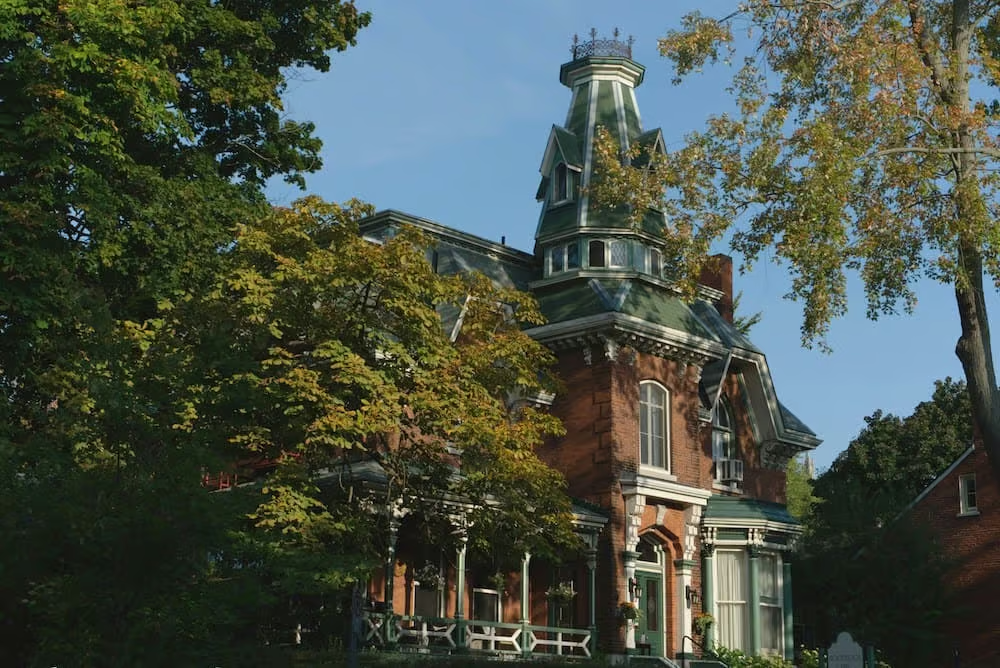
Too often today I see homeowners imposing trends onto houses instead of listening to what the building is already saying. A Victorian shouldn’t pretend to be a Miami penthouse. A Georgian doesn’t need to become an industrial loft. A Tudor doesn’t suddenly want black-framed barn doors. And a mid-century modern certainly doesn’t need to become a farmhouse.
Every house has its own language.
The best renovations begin by learning to speak it.
Learn more about the convergence of architecture and real estate with these posts next:
- Can an Architect Be a Real Estate Broker?
- Why Hire an Architect Real Estate Agent When Building a Home?
- Real Estate Developer Vs. Architect: What’s the Difference?
Great Renovations Don’t Erase History. They Frame It.
This, to me, is the heart of good renovation.
The objective isn’t to recreate the past, nor is it to erase it. It’s to allow the old and the new to have an intelligent conversation.
Some of the finest homes I’ve ever visited achieve exactly that.
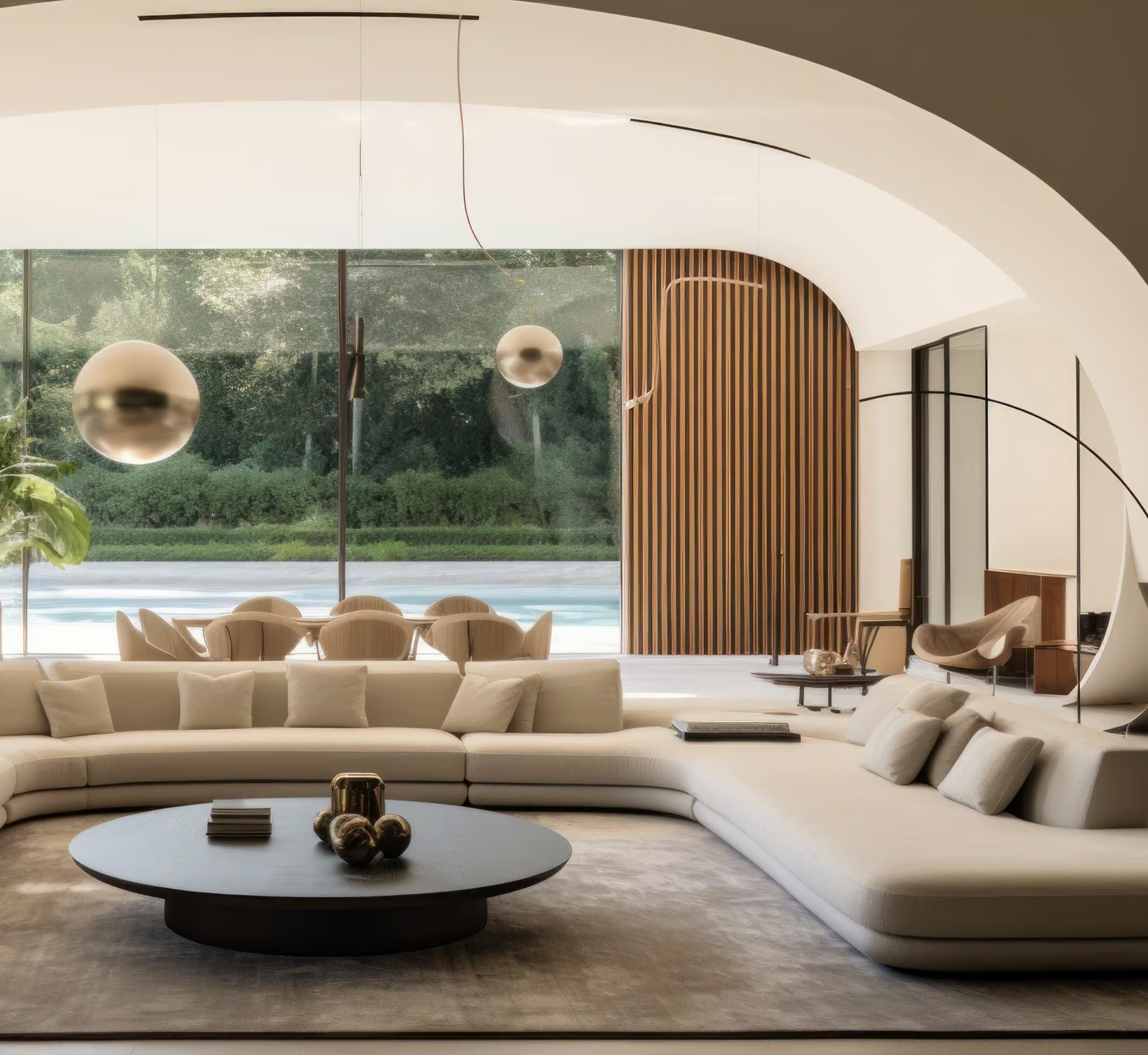
A beautifully detailed contemporary kitchen doesn’t diminish an Edwardian house—it celebrates it. A clean kitchen island beneath restored plaster cornices can be breathtaking. A carefully crafted piece of walnut millwork can make a century-old fireplace feel even more important. Thoughtfully designed indirect lighting can wash gently across stone, wood and plaster, making the architecture itself feel warmer and more intimate.
- The old house becomes the gallery.
- The new work becomes the art.
- Each makes the other stronger.
- That’s where the magic happens.
Further Reading: They Don’t Build Them Like They Used To: The Pros and Cons of Modern Homes
Luxury Isn’t About Doing More
It’s about editing.
Some of the most sophisticated homes I’ve walked through don’t contain more materials, more colours or more expensive finishes than average renovations. In fact, they often contain less. They’re quieter. More restrained. More confident.
- A beautifully proportioned kitchen island.
- An exquisitely detailed piece of cabinetry.
- A slab of remarkable natural stone.
- The gentle glow of concealed ambient lighting.
These become the objects that quietly anchor a room. They make a home feel precious without becoming precious in the untouchable sense. They invite you to use the space rather than admire it from across the room.
Good architecture doesn’t shout. It whispers.
For more insights on this type of curated luxury, read these posts next:
- The Flavour of Luxury in Today’s Homes
- The Most Luxurious Condos in Toronto
- What Real Estate Reality Shows Don’t Tell You
Toronto Has Extraordinary Houses
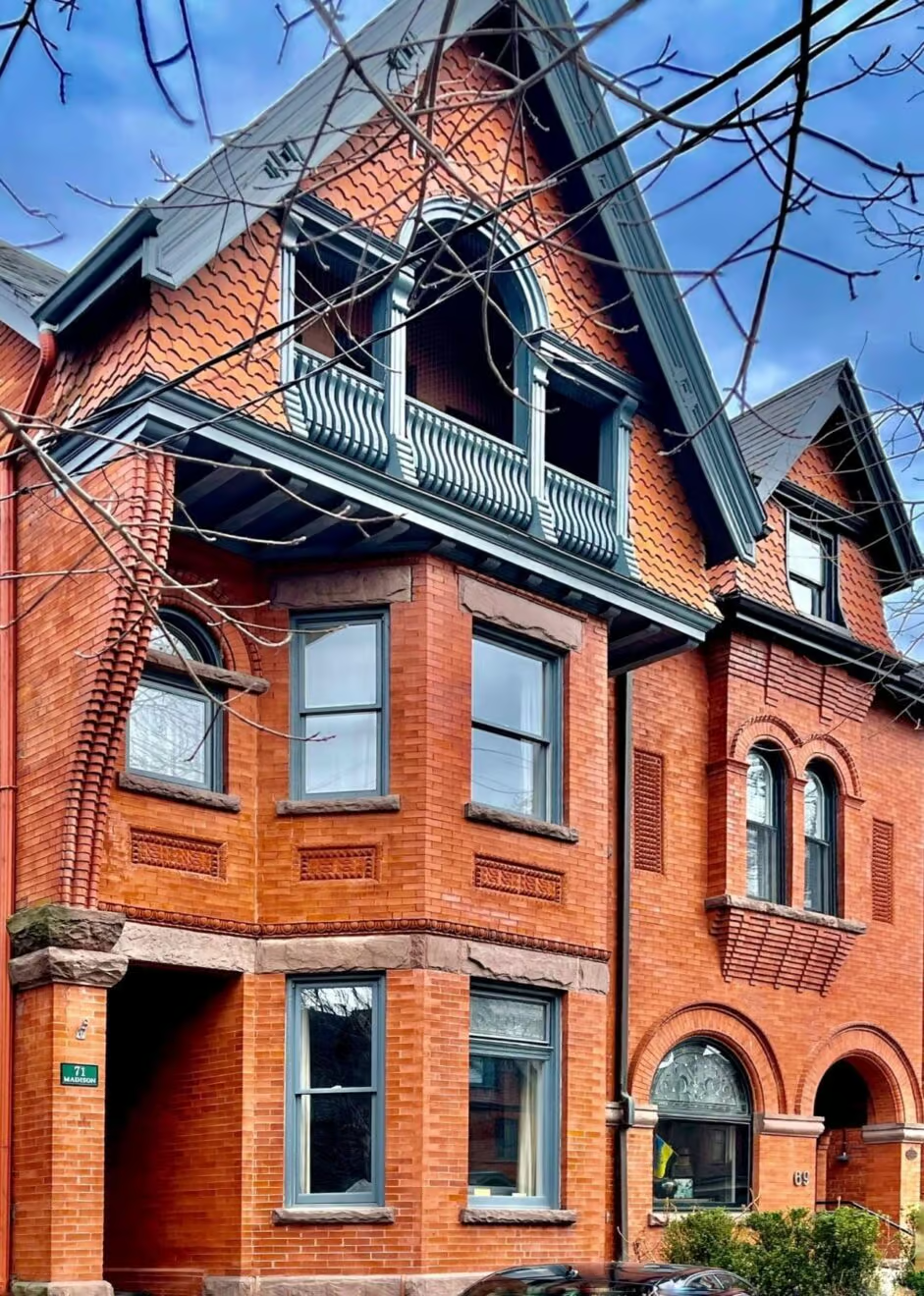
One of the pleasures of working throughout Toronto is seeing the remarkable variety of architecture we often take for granted. The Victorians of the Annex. The Edwardians of Moore Park. The Tudors of Forest Hill. The Arts and Crafts homes of Lawrence Park. The quiet mid-century modern gems tucked into Hogg’s Hollow and Don Mills.
Each neighbourhood has its own architectural vocabulary.
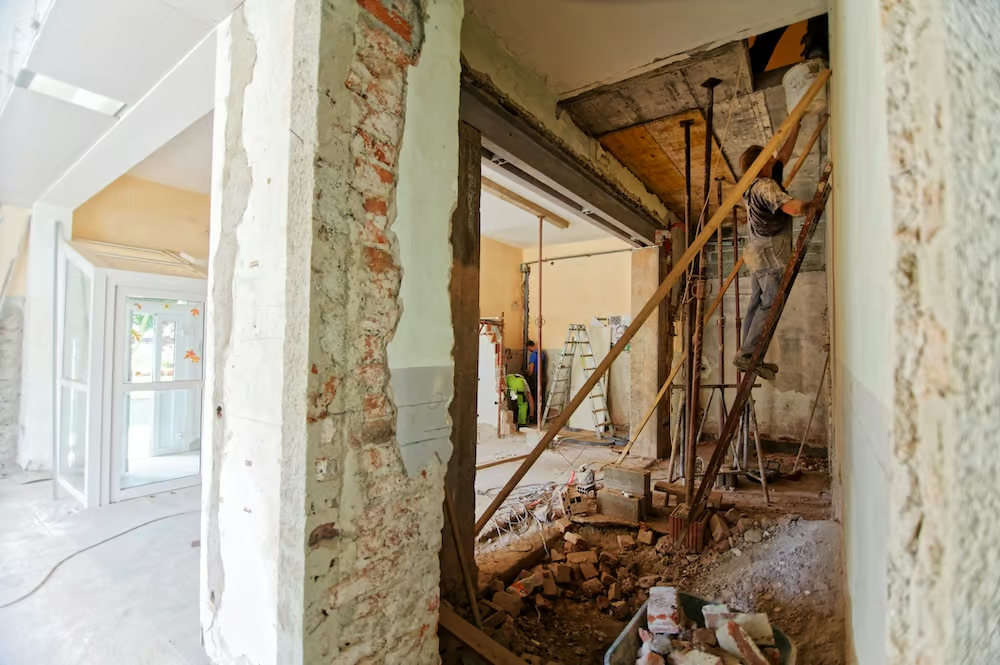
Yet I regularly walk through renovations that erase those distinctions altogether. Original staircases disappear. Fireplaces are removed. Beautiful woodwork is painted over. Windows become generic. Every room becomes white drywall punctuated by rows of recessed pot lights.
Technically, everything is new.
Emotionally, almost everything has been lost.
The house could now be anywhere.
I recently shared a tour of properties in my own neighbourhood. For more on this read: Most Interesting Homes in Hoggs Hollow
Somewhere Another Walnut Wall Has Just Been Painted White
Mid-century modern architecture probably suffers more abuse than any other style, perhaps because people mistake simplicity for emptiness.
Nothing could be further from the truth.
These homes rely on proportion, natural light and honest materials. Brick. Stone. Teak. Walnut. They celebrate the relationship between indoors and outdoors.
They don’t need to be made more modern.
They already were.
Modern kitchens, bathrooms and glazing can belong beautifully within these homes, but they should quietly support the original architecture rather than overpower it.
Somewhere today, another beautiful walnut wall has disappeared beneath a coat of white paint.
I confess I mourn every one of them.
Sometimes the problems start with the floor plans. Read the Condo Chronicles series on my blog, where I critique popular condo floor plans and advise on how I’d fix them.
Please Stop Buying Daylight
Few things date a renovation more quickly than poor lighting.
Somewhere along the way we collectively decided that brighter meant better.
It rarely does.
There also seems to be an unwritten rule that every renovation now requires black faucets, oversized pendant lights and enough LED strips to guide aircraft safely onto the roof.
A house illuminated entirely with cool white 4000K LEDs often feels less like a home than a dental clinic.
Warm light, around 2700 Kelvin, changes everything. Wood becomes richer. Stone becomes warmer. Faces become softer. Rooms become calmer.
Lighting shouldn’t be the first thing you notice.
It should simply allow everything else to look beautiful.
Keep reading these posts next for more advice on curating your own life of luxury:
- Smart Home Investments for a Refined Lifestyle
- Sustainability in Real Estate: How to Curate Your Life and Minimize Your Environmental Footprint
- Why Your Real Estate Agent Should Be a Homeowner
Windows Deserve Respect
Old windows eventually wear out, and replacing them is often exactly the right decision. But replacing them without understanding their proportions can fundamentally change the face of a house.
Beautiful contemporary windows can dramatically improve comfort and energy performance while still respecting the rhythm of an older façade. Likewise, thoughtful additions don’t need to imitate the original architecture. In fact, they often shouldn’t.
Some of the finest additions are unapologetically contemporary.
They simply know when to step back and allow the original house to remain the hero.
Renovate the Property Too
One of the easiest ways to transform a home is simply to walk outside.
Overgrown shrubs. Neglected gardens. Random plantings accumulated over decades. Cracked walkways. Poor exterior lighting.
These quietly diminish the experience long before someone reaches the front door.
Sometimes the greatest renovation isn’t an addition.
- It’s editing.
- Pruning.
- Cleaning.
- Refining.
- Allowing the architecture to breathe again.
A beautifully considered landscape prepares you for the house long before you step inside.
Are you considering selling your home soon? As an architect and real estate broker, I’m uniquely positioned to position your home for sale. Learn more about my approach by reading: Why Owners of Unique Toronto Homes Hire Me to Sell Them
Don’t Renovate from Pinterest
Pinterest, Instagram and glossy magazines can be wonderful sources of inspiration.
They’re also dangerous.
A successful home isn’t created by collecting ten photographs of kitchens you admire and asking someone to blend them together.
Great architecture is contextual. It responds to the proportions of the house, its history, its neighbourhood, its light and, most importantly, the people who live there.
That’s why experienced architects and thoughtful designers remain so valuable.
They don’t simply make homes look expensive.
They make them feel inevitable.
Are you seeking inspiration for your next home renovation? Skip social media and read these posts next:
- Magnificent 21st-Century Comfort in Edinburgh’s Historic New Town: Exploring 18 India St.
- Brilliantly Mid-Century Glass Architecture Meets Natural Splendour: Exploring the Roy O. Allen House
Travel Teaches Restraint
Whenever I’m in London, I find myself wandering through beautifully renovated Georgian townhouses where remarkably little has been removed. The cornices remain. The staircases remain. The fireplaces remain. Then, tucked quietly behind those historic rooms, you’ll discover an extraordinary contemporary kitchen that feels almost like a sculpture placed inside the house.
Paris offers similar lessons. The finest Haussmann apartments never apologize for their history. They celebrate it. The parquet floors remain. The marble fireplaces remain. The soaring doors remain. The contemporary interventions simply make them even more beautiful.
New York’s brownstones have mastered this dialogue between old and new perhaps better than anywhere.
Toronto is beginning to understand it too.
Thankfully.
Further Reading: Two Weeks, Three Cities and the Architecture of Feeling
We Are Only Temporary Custodians
I sometimes think houses breathe a quiet sigh of relief when they’re renovated by someone who first takes the time to understand them.
Perhaps that’s sentimental.
But after a lifetime of designing, building, renovating and selling homes, I’m convinced there’s some truth in it.
Whenever I’m asked to evaluate a house today, I’m rarely thinking only about today’s market value. I’m wondering what the original architect intended. What the builder was trying to achieve. Which details deserve another century. And where a thoughtful contemporary intervention might quietly elevate everything around it.
A hundred years from now, someone else will almost certainly renovate that same house. They’ll introduce technologies we can’t yet imagine. They’ll make different decisions than ours.
Hopefully they’ll also recognize the craftsmanship we chose to preserve.
That’s the privilege of owning a character home.
We’re never really its owners.
We’re simply its current stewards.
If we do our job well, the house won’t become something different.
It will simply become a better version of itself.
And to me, that’s what great architecture has always been about.
Do you have questions about buying or selling unique homes in Toronto? Get in touch with me today by calling me, emailing me, or filling out the form on this page.

Find Your Life of Luxury
Whether buying or selling a home, I can help you find your life of luxury. Get started today.