



Toronto has always had a slightly complicated relationship with the idea of being world-class.
We want the designation, certainly. We like it when an international ranking tells us we belong in the same conversation as London, Paris, Tokyo or New York. Then, almost immediately, we become suspicious of the ranking, complain that the city has no confidence, no transit, too many condos, not enough culture, or that Montréal is more interesting anyway.
Perhaps that is part of being Toronto.
What is striking, though, is how consistently serious international studies now place the city somewhere among the world’s leading twenty or thirty urban centres, even though they arrive there by very different routes.
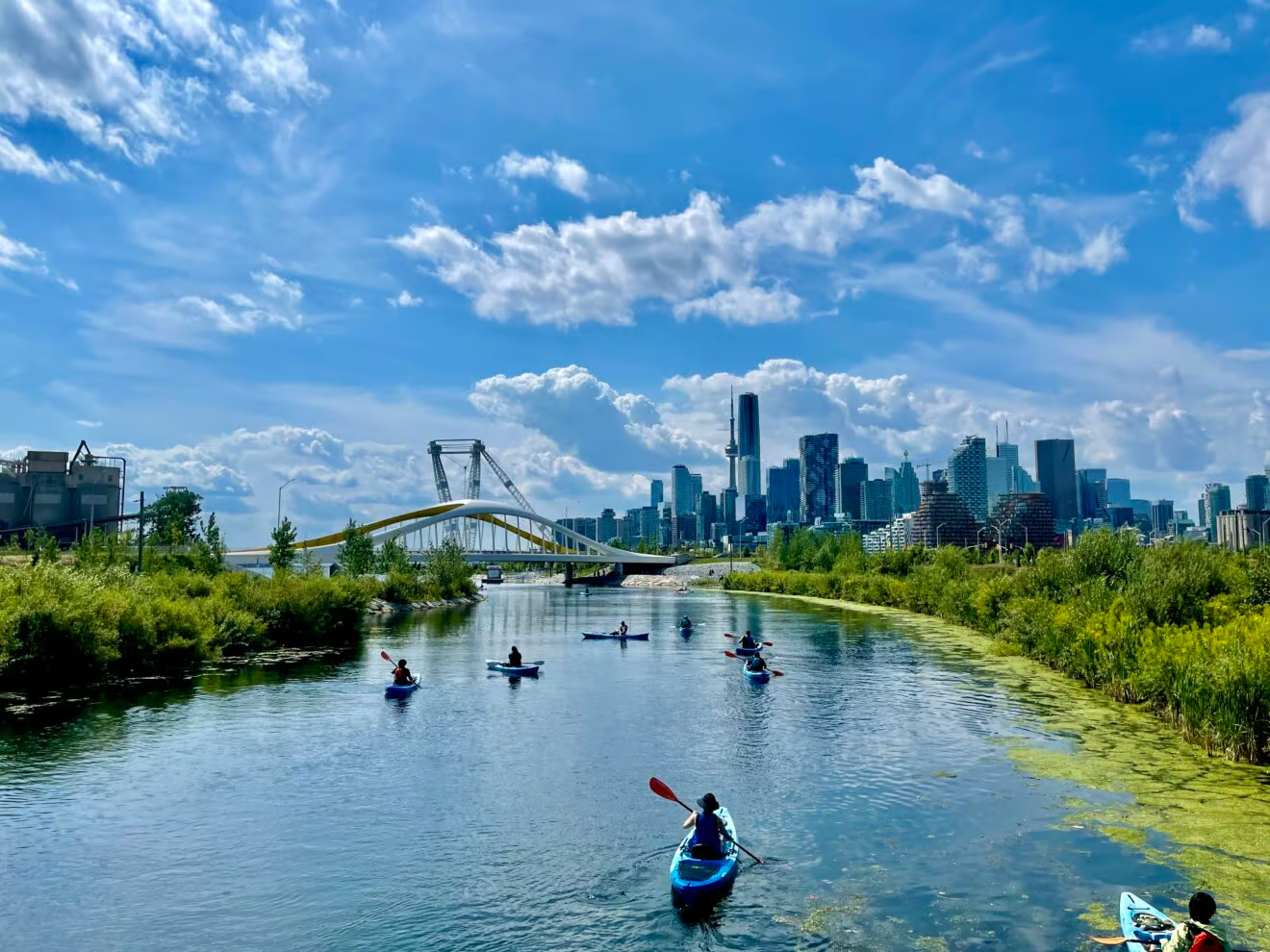
Resonance’s World’s Best Cities 2026 puts Toronto at 17th in the world, describing a metropolitan region of roughly 7.6 million people whose strength begins with its brainpower. It ranks Toronto fourth globally for educational attainment and 11th for universities, while also pointing to the transformation of the waterfront and the opening of Biidaasige Park.
Oxford Economics places Toronto 20th among 1,000 cities, using a very different methodology built around economics, human capital, quality of life, environment and governance.
The Mori Memorial Foundation’s Global Power City Index puts Toronto lower, at 26th, while Kearney’s Global Cities Index places it closer to the low teens, driven largely by strong scores in human capital and information exchange. GaWC, meanwhile, classifies Toronto as an Alpha city, firmly within the group of globally connected urban centres that matter to international business and professional services.
That spread, somewhere around 13th to 26th, depending on who is measuring, does not mean someone has Toronto wrong.
It tells us something more useful.
There is no single definition of a great city.
I’ve Watched Toronto Become Something Else
I was born in Toronto and, for better or worse, have spent virtually my entire life here. That gives me a slightly different relationship with all these declarations that Toronto has finally become a “world-class city.” I remember quite clearly when enormous parts of downtown didn’t look very world class at all.
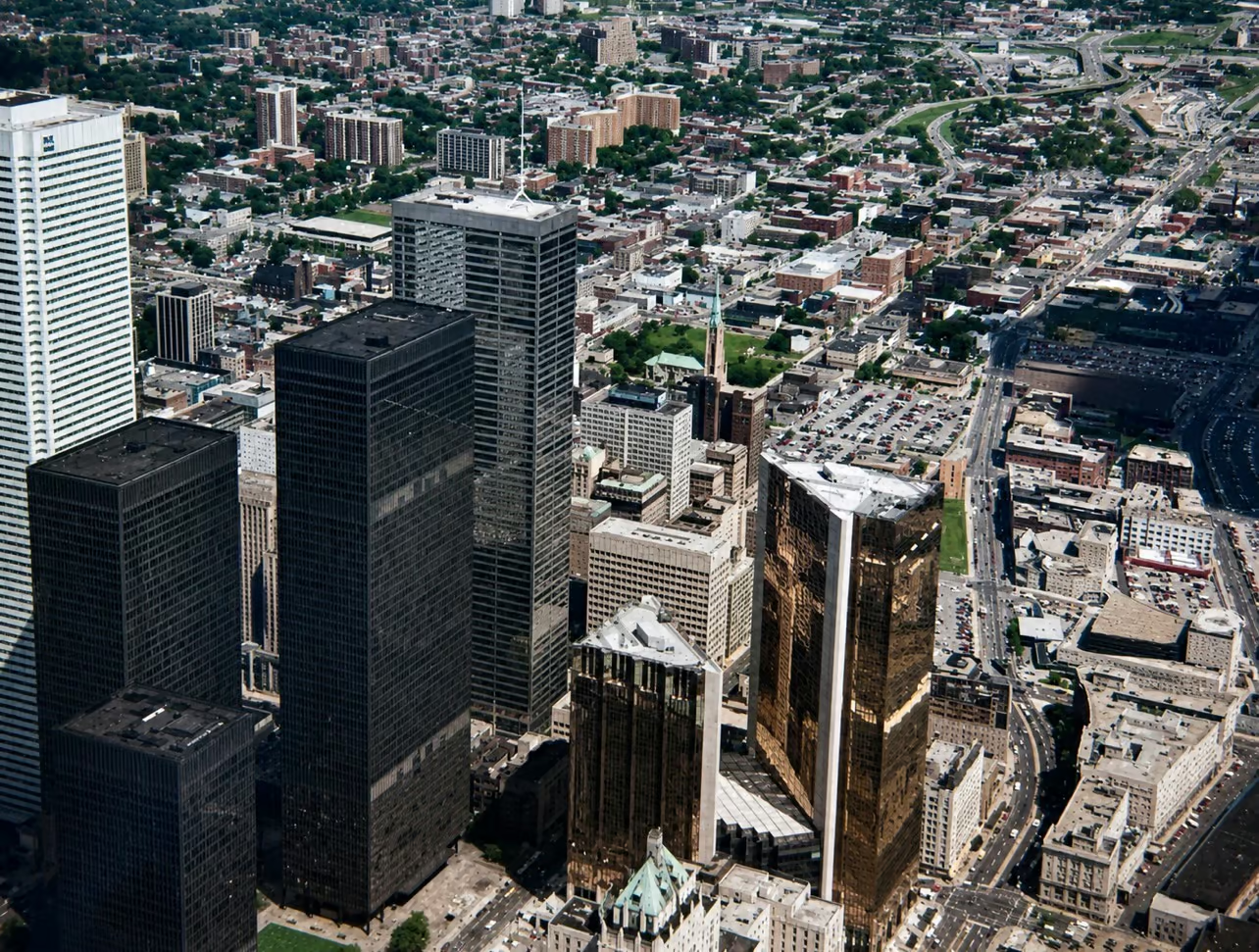
By the 1980s, whole stretches of the core had become surface parking lots. Older buildings deteriorated, were demolished and, in many cases, replaced by nothing. The economics were simple enough: clear the site, reduce the burden of carrying an aging structure, collect parking revenue and wait for the land underneath it to become more valuable.
Eventually it did.
Most of those holes have now been filled. Toronto has built an extraordinary amount over the past few decades, and the skyline bears almost no resemblance to the city of my childhood.
But filling a parking lot with a building is not necessarily the same thing as making a city.
That distinction has always interested me.
As an architect, a real estate agent, and a homeowner, I have a unique perspective on Toronto’s unique history and its path forward. Here are a few more posts in this vein that you might be interested in reading next:
- What Homeowners Need to Know About Toronto’s Distinct Architectural History
- Can an Architect Be a Real Estate Agent?
- When Did Staging Become More…Staged?
My mother used to comment on University Avenue. She thought it was one of Toronto’s most beautiful streets — broad, formal, landscaped, with Queen’s Park at one end and some genuinely fine institutional architecture along it. But she would also point out how strangely dead it could be at street level.
It was impressive as an urban composition without always being especially interesting to walk along.
That is a very Toronto problem.
We have often been good at individual buildings and large gestures while being less successful with the connective tissue between them: the shopfronts, cafés, public spaces, cultural institutions and ordinary daily activity that make a street feel inhabited rather than merely planned.
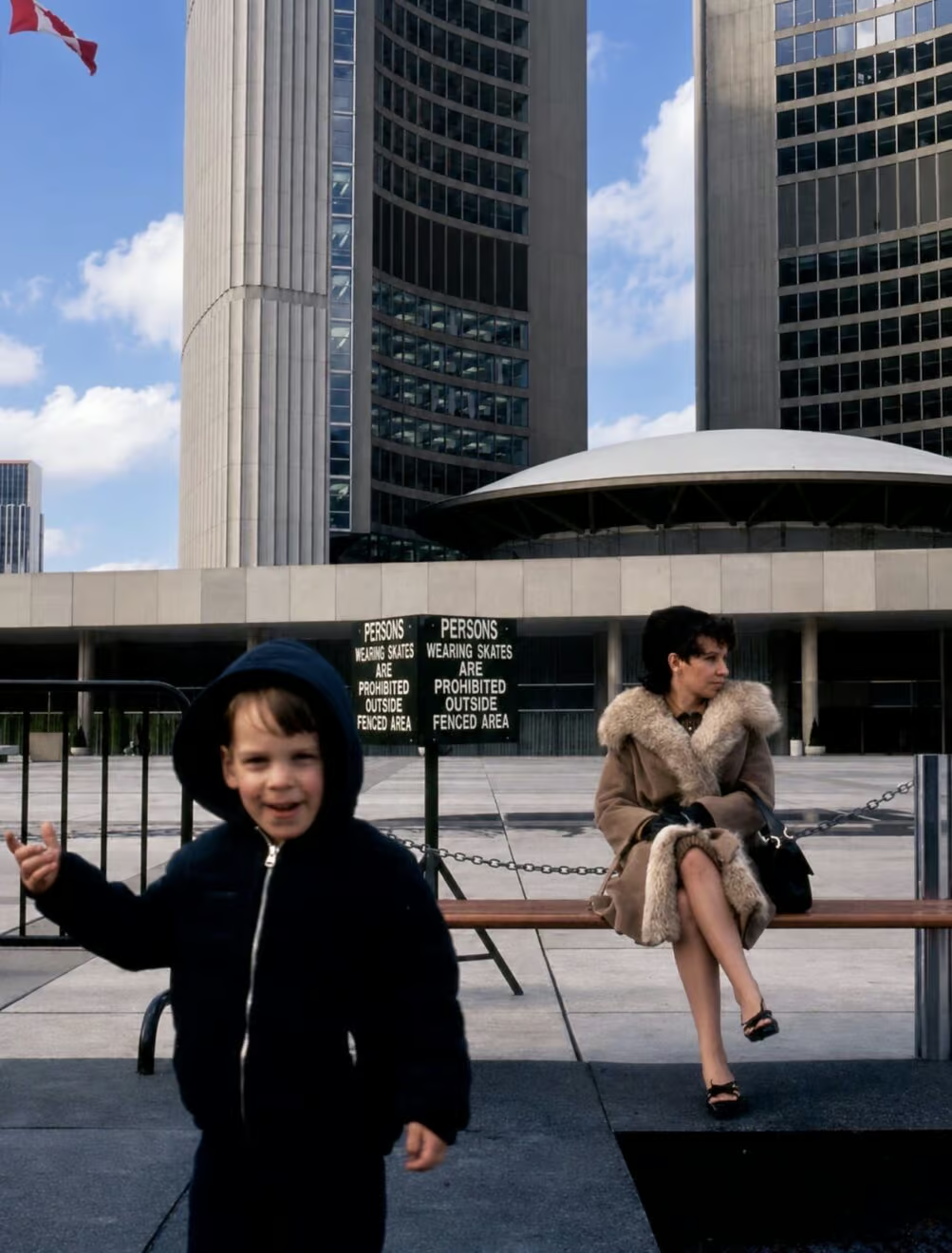
My mother had a particularly useful perspective on all of this because she arrived here from Paris in 1961. She landed first in Montréal and apparently thought Canada seemed rather promising. Then she took the train to Toronto, where she had come to work on some of the modernist projects beginning to reshape the city.
Her reaction on arrival was essentially: What have I done?
Toronto struck her as painfully provincial.
When I was a child, she would often drive to Buffalo simply to shop because Toronto seemed so dull by comparison. That sounds almost inconceivable now, which may be one of the best measures of just how dramatically the city has changed.
My father had arrived from Winnipeg a decade earlier, in 1950, and presumably had a rather different reaction. Toronto must have seemed positively metropolitan. He was also fortunate enough to arrive just as Canadian modern architecture was beginning to find its confidence, working with John B. Parkin during one of the most interesting periods in the city’s architectural development.
So even in the Toronto my mother found disappointing, there was ambition.
And that is another part of the city’s history we sometimes forget.
Toronto has repeatedly imagined itself on a much grander scale than it ultimately built.
There were ambitious civic plans in the early twentieth century for Federal Avenue and later Vimy Circle, envisioning a much more ceremonial downtown. Eaton’s had enormous plans for College Park in the 1920s, including a tower that would have been among the tallest buildings in the world. The Depression put an end to much of that.
Toronto was also seriously discussing underground rapid transit in the early 1900s, yet it took roughly another half-century before the first subway finally opened.
So Toronto’s problem has perhaps never been a lack of ambition.
It has been an extraordinary ability to plan ambitiously, hesitate, compromise, postpone — and then build something decades later when it has become unavoidable.
That habit has shaped the city almost as much as the things we actually constructed.
Which makes the present moment particularly interesting. Toronto has finally achieved much of the scale earlier generations imagined.
What remains unresolved is whether scale alone has made it a great city.
A City Can Be Powerful Without Being Paris
Toronto’s strengths are not difficult to identify.
It is extraordinarily educated. It is economically substantial. It is one of North America’s principal financial centres. It has three major universities, significant medical and research institutions, a rapidly evolving technology sector, a major film and television industry, and an immigrant population connecting it to virtually every part of the world.
A majority of Toronto residents were born outside Canada. That is not simply an interesting demographic statistic. It is arguably one of the foundations of the city’s importance.
Toronto does not merely trade with the world.
A considerable portion of the world lives here.
And yet Toronto is not Paris.
It does not have two thousand years of accumulated monuments, London’s concentration of global institutions, New York’s cultural swagger or Tokyo’s extraordinary infrastructure.
Why should it?
World class should not mean resembling somebody else.
A city becomes important because of what it contributes to the world and, perhaps more importantly, what kind of life it creates for the people who live there.
There are many Toronto neighbourhoods that have a similar vibe and feel to other cities. Learn more about The Best Neighbourhoods in Toronto and their Iconic Global Counterparts.
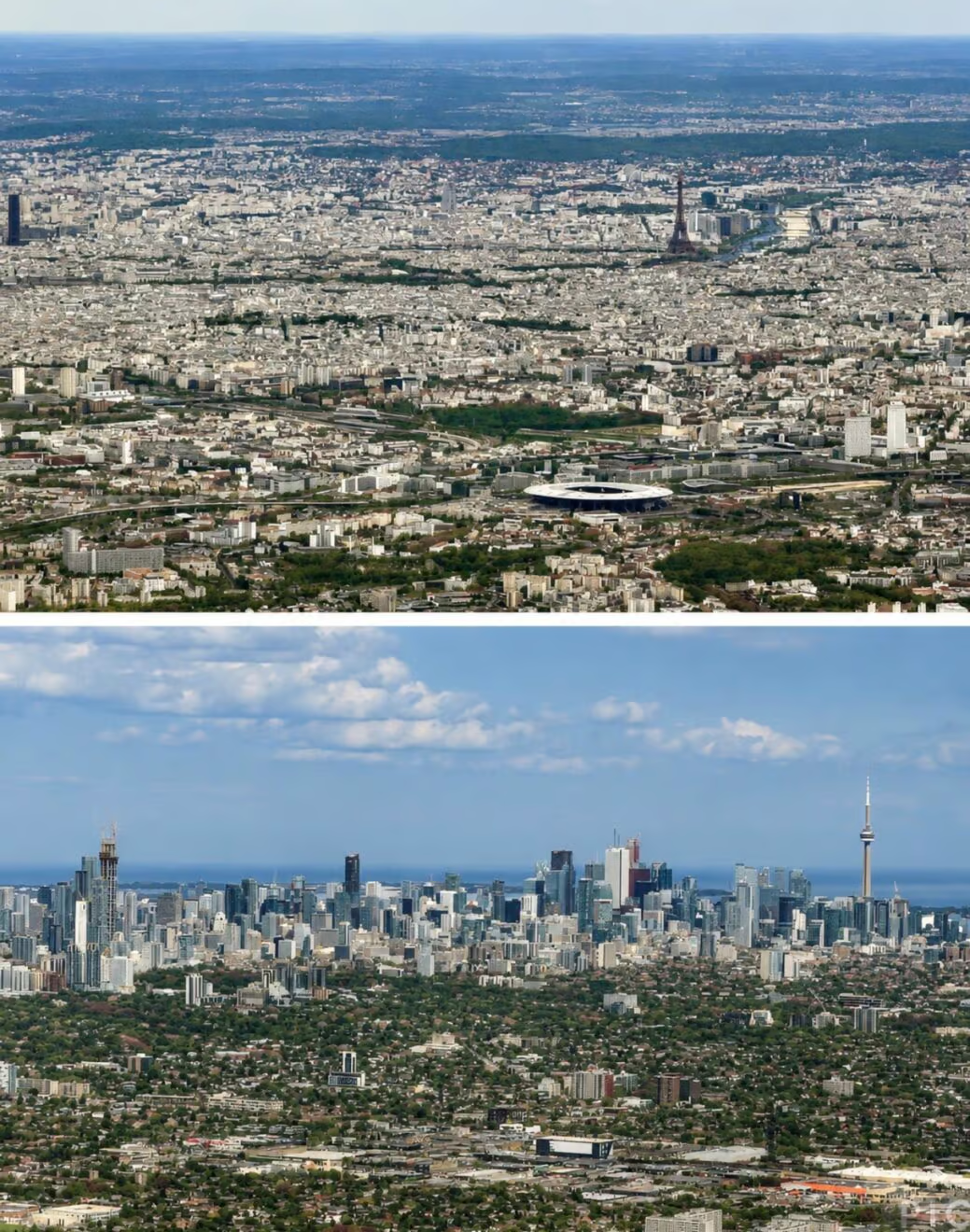
Our Cultural Inferiority Complex
This is where Toronto’s famous chip on its shoulder becomes interesting.
For decades, we seemed to believe culture had to arrive from somewhere else before it counted. European art was important. New York theatre was important. Toronto culture was something we were still waiting to develop.
That is increasingly absurd.
The city has major institutions, the AGO, ROM, Canadian Opera Company, National Ballet, TIFF, the symphony and others, but much of what makes contemporary Toronto culturally interesting happens below that scale.
There are smaller galleries, independent theatres, artist-run spaces, music venues, architectural organizations, neighbourhood museums, design, food and communities that constantly overlap with one another.
There is considerably more here than we sometimes bother to use.
But accessibility matters.
Culture that exists primarily for people who can comfortably afford admission every time they want to experience it is not functioning as fully as it might. Toronto has made progress. Its City-run history museums now offer free general admission, and other institutions have expanded free-access programmes.
I would go further.
There is a strong argument that residents whose taxes help sustain the civic and cultural ecosystem should have far broader access to major institutions — perhaps free permanent collections, with paid special exhibitions.
London has demonstrated for years how powerful it can be when museums become part of ordinary life rather than occasional destinations.
That is cultural confidence.
Buildings Aren’t Enough
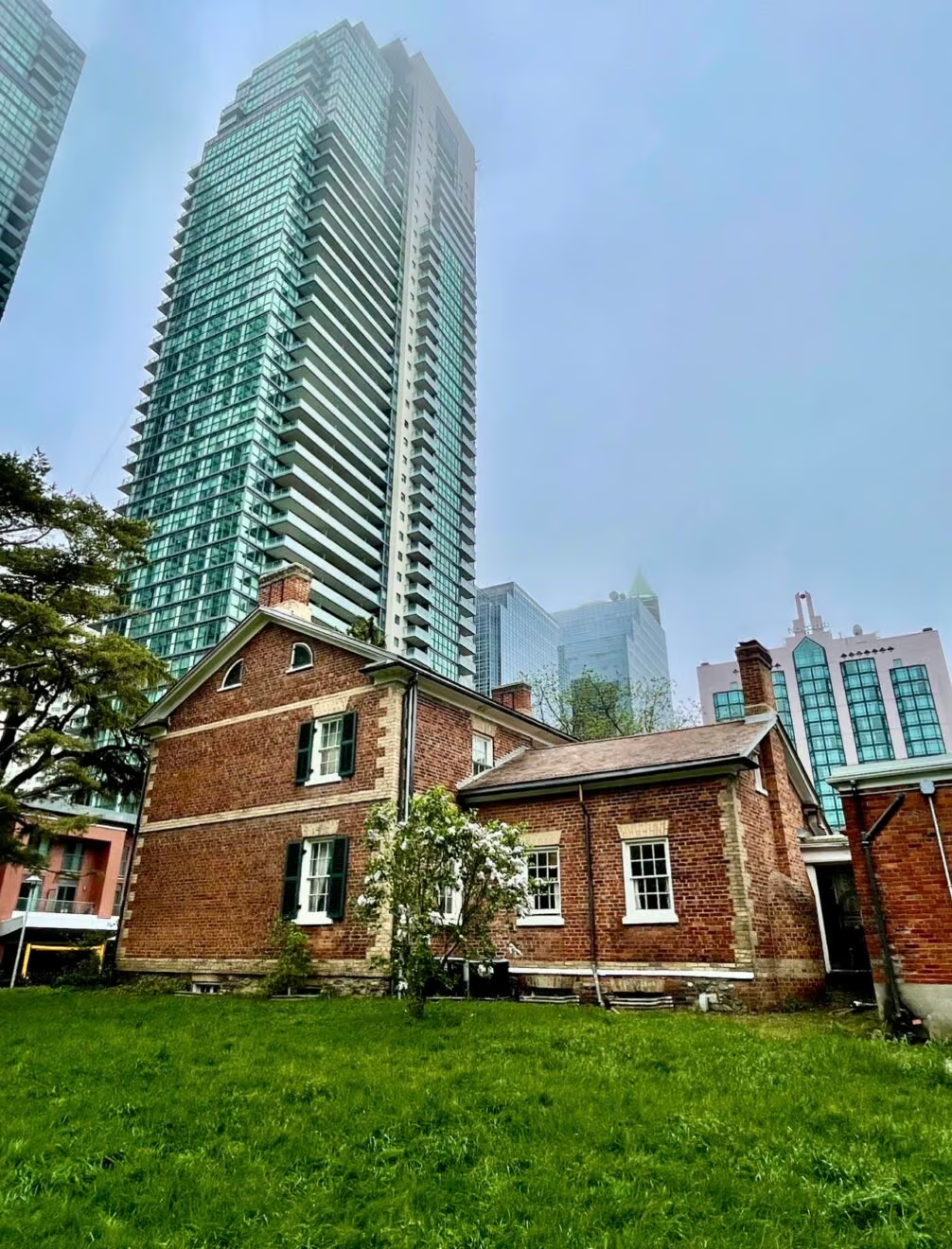
Toronto has spent much of the past twenty years looking increasingly impressive from a distance.
There are towers everywhere.
That is not the same thing as becoming a great city.
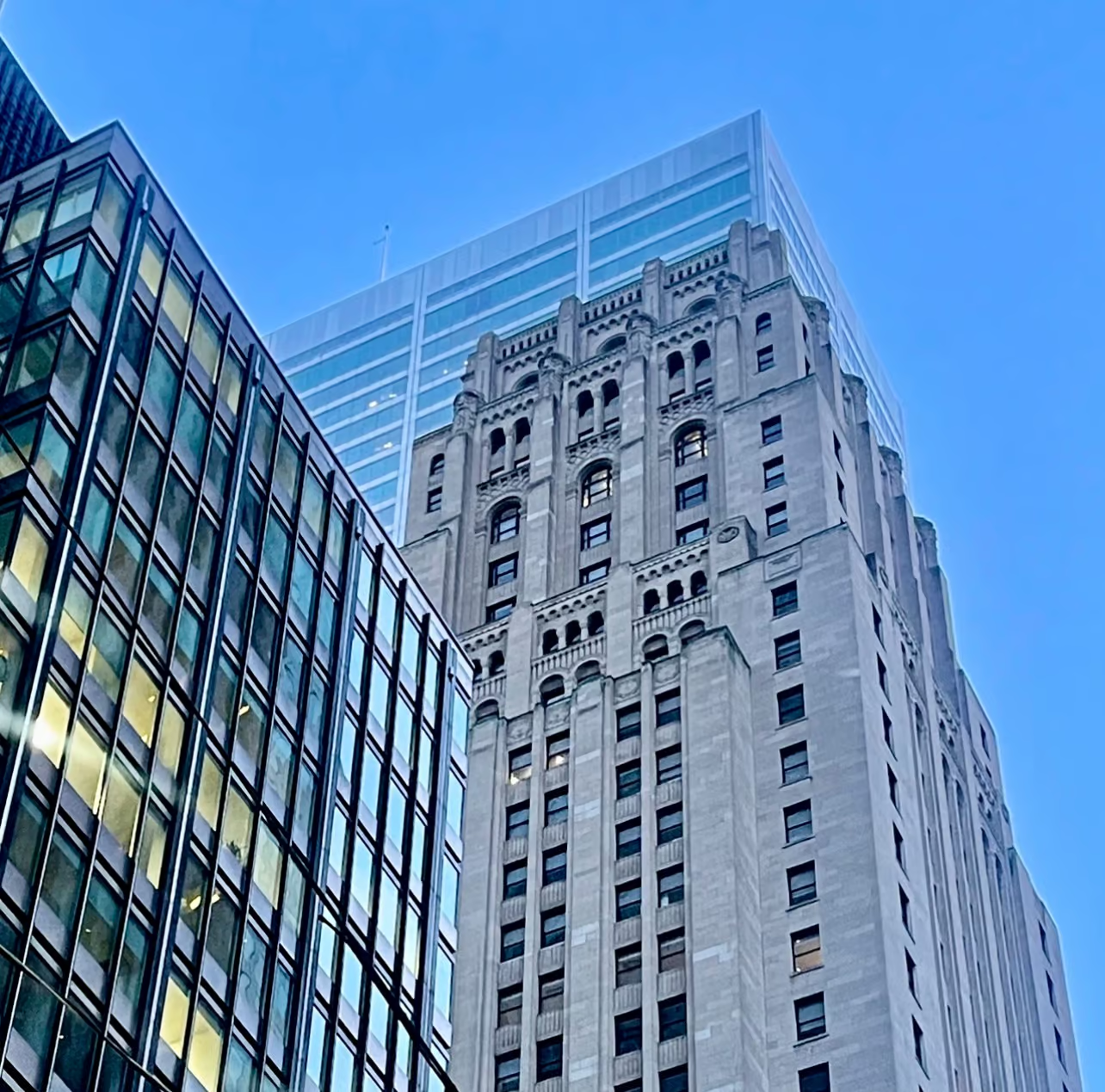
A skyline is evidence that capital is being invested. It tells you comparatively little about the quality of life occurring at street level.
The truly great cities are composed of thousands of smaller experiences: a beautiful walk, an old building that has been allowed to survive, an excellent local restaurant, a neighbourhood park, a bookstore, a museum you can wander into without planning, reliable transit, trees mature enough to shade the pavement, and the possibility of encountering people unlike yourself.
This is one reason the transformation of the Port Lands feels significant. Rerouting the Don River and creating Biidaasige Park is not merely another development project. It is the city finally turning a piece of infrastructure into landscape, ecology and public life.
That is city-building.
The challenge now is to bring that same ambition to the spaces between the big projects.
For more on Toronto’s unique landscape and the convergence of local real estate, building, and lifestyle curation, here are a few more posts you may find interesting:
- Most Interesting Homes in Hoggs Hollow
- Looking for Exceptional: Stories of Architecture, Homes, and a Life By Design
- Buy the Life, Not Just the House
And Then There Is Transit
If there is one area where Toronto’s ambitions and reality repeatedly collide, it is transportation. A genuinely global city needs to allow people to move through it easily without requiring a car.
Toronto has the bones of that system. The subway, streetcars, GO network and regional rail give it considerably more transit infrastructure than most North American cities.
But expectations are no longer North American.
If Toronto wants to compare itself with London, Paris, Madrid, Seoul or Tokyo, the comparison has to include frequency, reliability, network reach and the speed at which new infrastructure gets built. You cannot call yourself world class when discussing universities, immigration and finance, then suddenly switch to “well, compared with other Canadian cities…” when the subject becomes transit.
That is cheating.
And perhaps this is where Toronto’s long habit of planning, postponing and finally building too late matters most. We have been talking about some transit corridors for generations.
Great cities cannot afford to spend half a century congratulating themselves on plans.
Why the Rankings Are So Different
The disparity between Toronto’s rankings actually makes perfect sense.
Resonance rewards livability, perception, attractiveness, education, parks and prosperity. Toronto does well because people want to live here and because the city has global visibility, talent and extraordinary demographic reach.
Kearney measures global flows of capital, talent, information, culture and political influence. Toronto’s educated population and connectivity push it upward, while comparatively limited political power and cultural reach hold it back.
Mori gives substantial weight to accessibility and cultural interaction, areas where older and more intensely connected global capitals have enormous structural advantages.
Oxford Economics is broader still, incorporating quality of life, environment and governance alongside economics and human capital. Toronto’s housing affordability problems therefore hurt it significantly.
And financial-centre rankings measure something narrower again.
The rankings aren’t contradicting one another. They are looking at different Torontos.
So Where Does Toronto Really Rank?
If someone forced me to put a number on it, I would probably place Toronto somewhere around 15th to 20th among the world’s cities overall.
Not because averaging a collection of rankings produces scientific truth, but because that range feels approximately right.
Toronto is not yet in the tiny first tier with London, New York, Paris and Tokyo — cities whose accumulated cultural, economic and geopolitical influence is almost impossible to reproduce.
But Toronto belongs comfortably in the next group of genuinely important international cities.
Its great assets, education, immigration, stability, finance, research, neighbourhoods, opportunity and quality of everyday life, are already world class.
Its weaknesses are equally apparent: housing affordability, transit, uneven architecture, a cultural sector that could be better funded and more accessible, and a persistent reluctance to treat its own history and public realm with the seriousness they deserve.
Perhaps that is why Toronto still feels slightly unfinished.
It is no longer the provincial city my mother encountered when she stepped off the train from Montréal in 1961 and wondered what on earth she had done.
Nor is it simply the optimistic modern city my father discovered a decade earlier, when architects and planners were beginning to imagine something much larger.
It has become something neither of them could really have anticipated.
The question now is not whether Toronto is world class.
It is whether we are prepared to behave like a city that already is.
For help navigating the Toronto real estate market, get in touch with me today. Fill out the form on this page or call/email me directly to connect.
Find Your Life of Luxury
Whether buying or selling a home, I can help you find your life of luxury. Get started today.