



The House That Changed Everything – Act One
The Bug
People occasionally ask me how I ended up becoming a builder and developer. The answer isn’t nearly as straightforward as they might expect because it certainly wasn’t part of some grand plan. Looking back now, I can see that my career evolved through a series of experiences that quietly nudged me in a different direction. At the time, though, I was simply following opportunities that interested me and doing work that I genuinely enjoyed.
By the end of the 1990s, life was in a good place. Sandy and I had our young family, and the commercial construction management company that my business partner and I had built throughout the decade was thriving. We had assembled a terrific team, developed wonderful clients and were involved in some fascinating projects. I loved the business. Finding new work, building relationships, assembling teams and watching complicated projects come together was immensely satisfying. Looking back, I realize I wasn’t running away from that career at all. If anything, I was walking away from something that had become very successful.
A couple of years before that, however, something happened that quietly changed the way I looked at architecture, real estate and, ultimately, my own future.
Sandy and I had been looking for a house for our young family. Like most couples, we simply wanted a place that felt like home. At the same time, I don’t think I’ve ever been able to look at a property without wondering whether there might be another opportunity hiding beneath the surface. Even while searching for a family home, the architect in me was studying sites, proportions and possibilities.
Read more about the convergence of real estate, architecture, and home building with these posts next:
- Real Estate Developer Vs. Architect: What’s the Difference
- Why Hire an Architect Real Estate Agent When Building a Home
- What are the Benefits of Working with an Architect Real Estate Broker
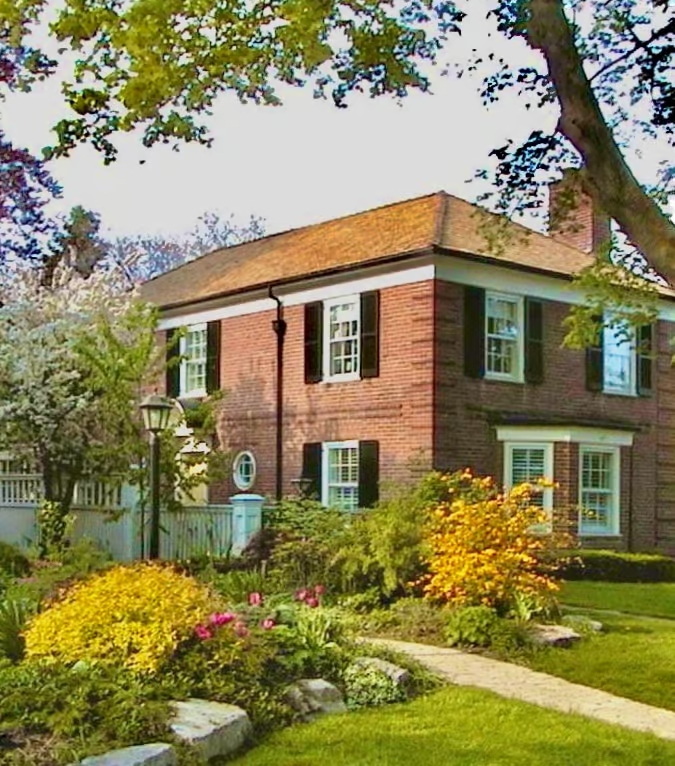
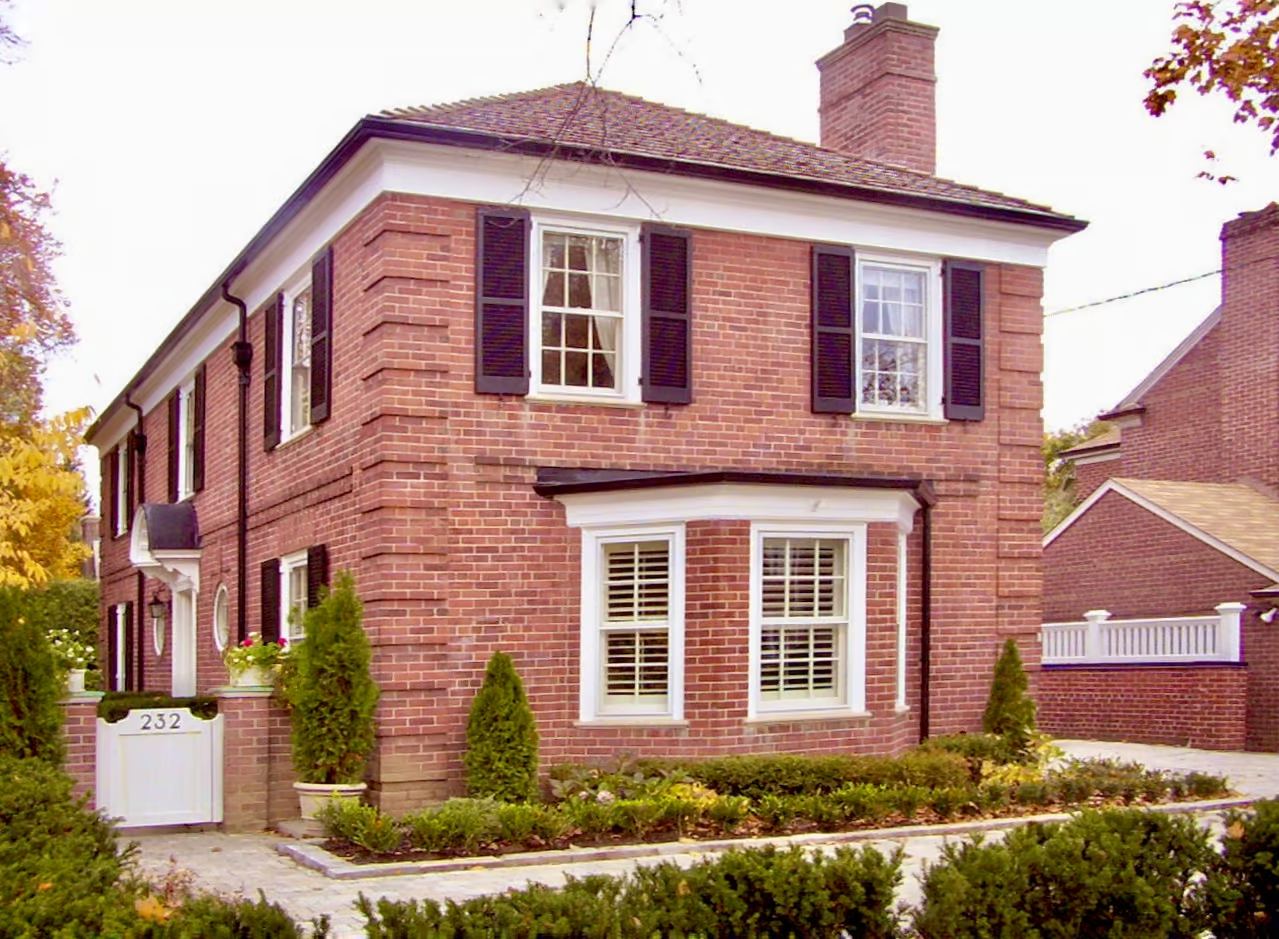
We looked at a number of houses, but none of them really captured our imagination. Then our real estate agent introduced us to a beautiful Georgian home sitting on only half of an unusually large property – a double lot. From the moment we walked through the front door, we absolutely fell in love with it. It had wonderful proportions, beautiful detailing and a quiet elegance that immediately felt right. Unfortunately, it was also well beyond what we thought we could afford.
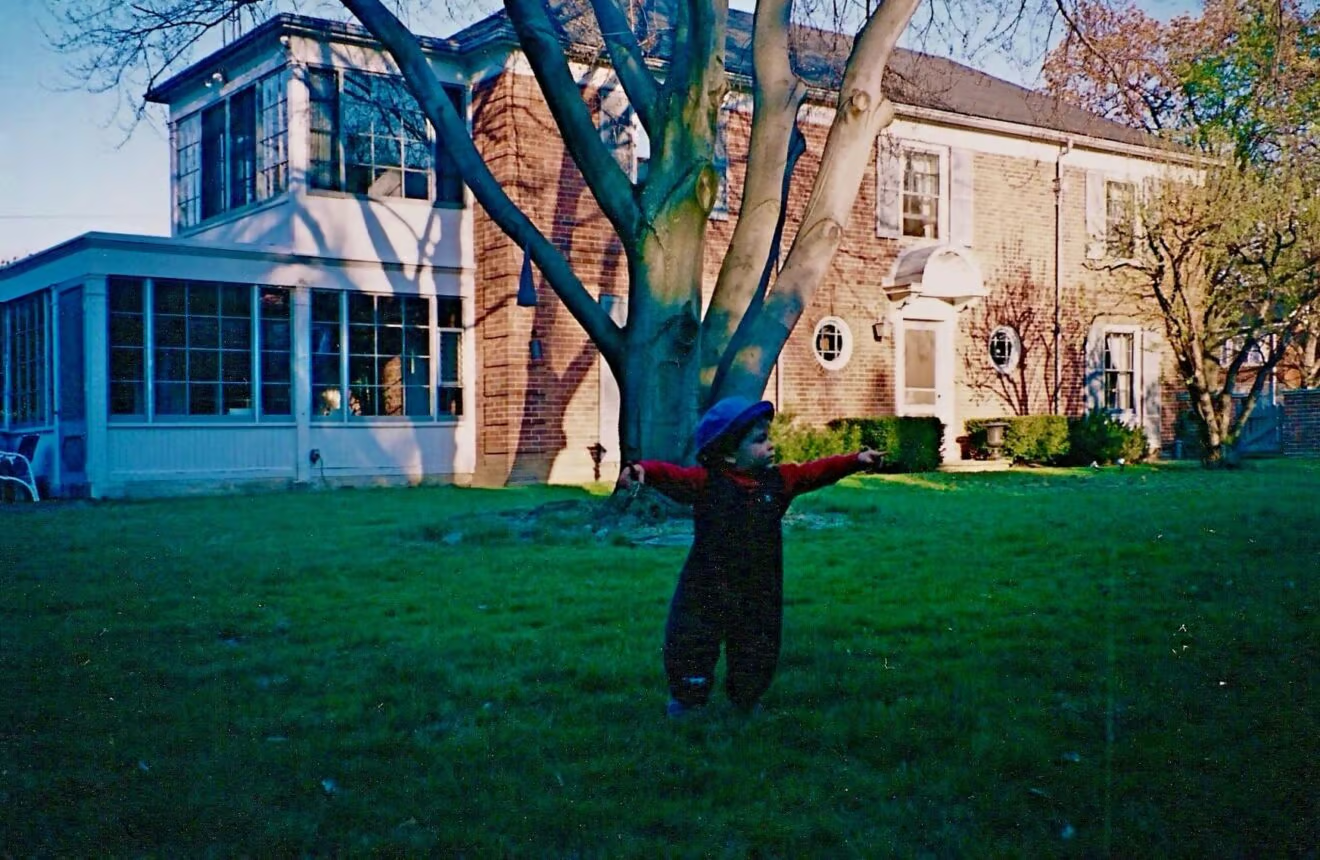
Ordinarily, that would have been the end of the story. Instead, I found myself standing in the garden looking around the property rather than at the house. Because the home occupied only one half of the site, I began wondering whether the land could be easily severed into two separate parcels. If it could, perhaps I could design a new house for the vacant portion, sell that building lot together with the architectural drawings, and use the proceeds to make the purchase possible.
It was the first time I had ever approached a bank with an idea rather than simply a property. Looking back, I probably didn’t appreciate how unusual that was. They weren’t just financing a house; they were placing their confidence in a vision. Fortunately, they understood exactly what I was trying to accomplish, liked the proposal, and agreed to finance the purchase.
If you’re on the house hunt currently, here are a few posts you might find interesting:
- The Ultimate Guide to House Hunting in Toronto (With a Dose of Humour!)
- Why Your Real Estate Agent Should Be a Homeowner
- Lasting Quality in Toronto Homes: Features to Look For

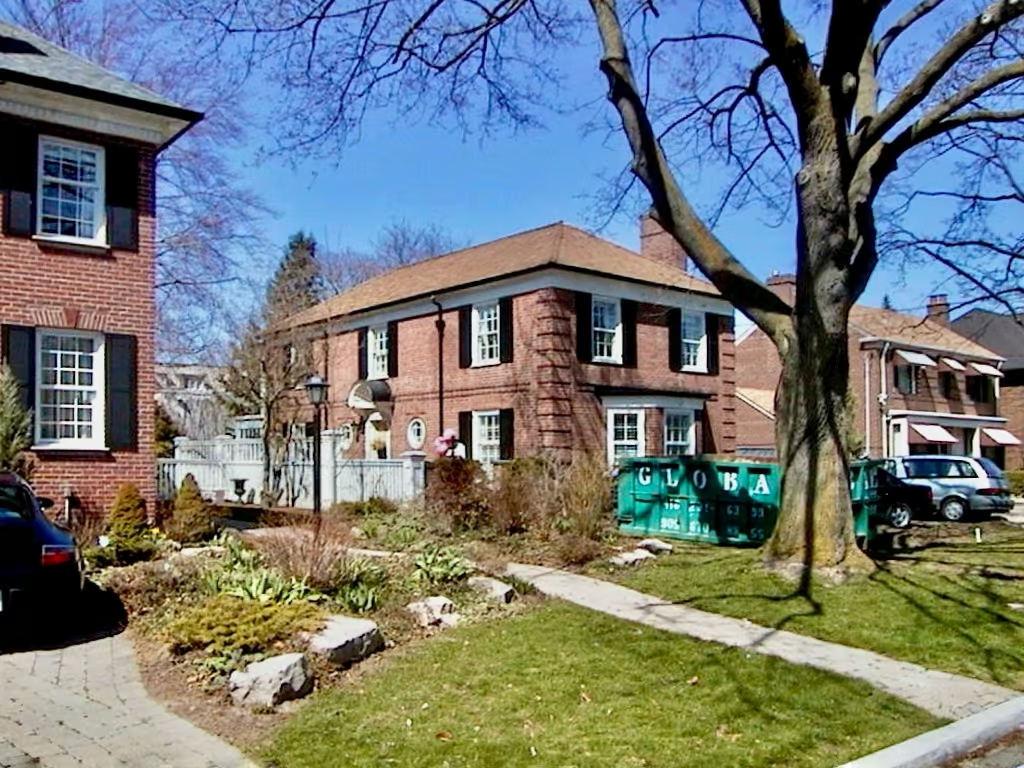
The project unfolded almost exactly as I had imagined. The severance was approved, I designed a new Georgian home for the neighbouring lot as a companion to the original house, and the land and architectural drawings sold successfully. My intention was that the two houses would face one another across a generous landscaped space, each with a side-centre hall plan, complementing one another without competing. Best of all, the original Georgian became our family home, where Sandy and I would raise our children and create years of wonderful memories.
There was, however, one disappointment.
The purchasers loved the design but decided to hire their own builder. As construction progressed, I found myself watching the house take shape from across the lawn every evening when I came home from work. Gradually, some of the details that had mattered to me began to disappear. Window proportions changed, trim profiles were simplified, materials were substituted and little architectural decisions were made that slowly altered the character of the house. None of it was catastrophic, and I don’t blame either my neighbours or their builder. They simply had different priorities, and their contractor wasn’t accustomed to building houses at that level. Occasionally I’d mention something to my neighbour, and he was always appreciative, often asking the builder to make a correction. Even so, I couldn’t help feeling that the finished house was drifting away from the vision I had worked so hard to create.
Thinking about buying an older home with the intent to renovate it? Read my post How to Renovate a Character Home without Destroying its Character.
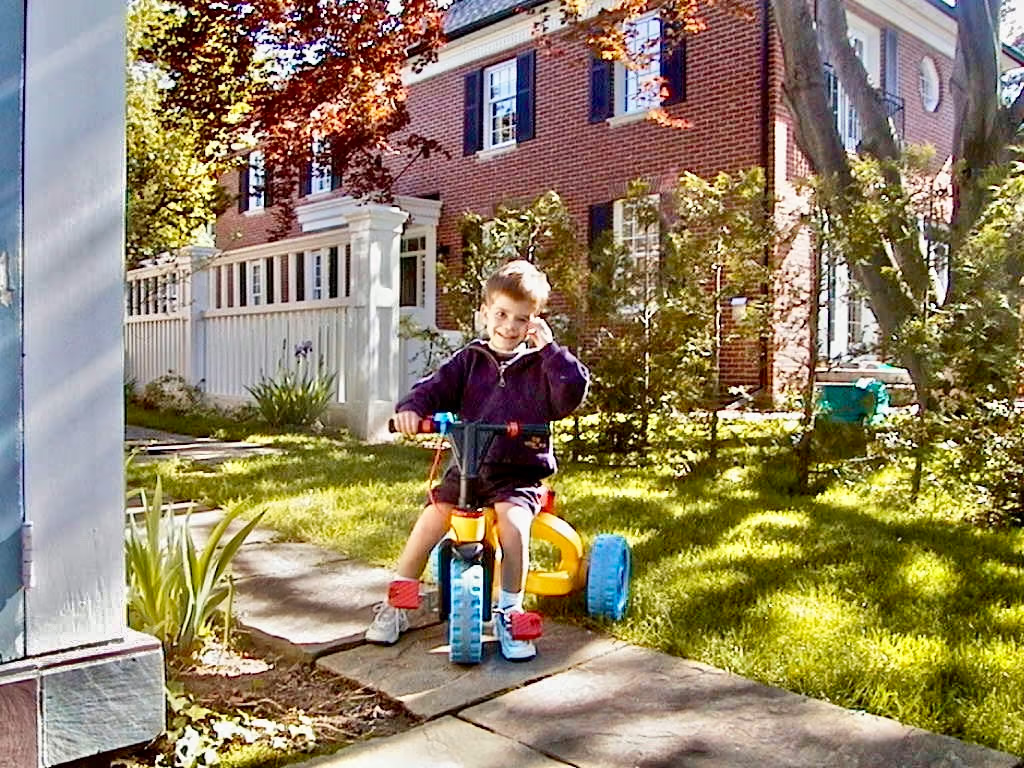
The experience reminded me of something that had happened almost ten years earlier. At the time, I was working in Toronto as an architect, designing cinemas across the United States for Cineplex as the company expanded south of the border. I watched my carefully considered designs gradually become diluted as projects moved through construction and cost engineering. Eventually, I walked into the office of the principal of project management (a civil engineer) and asked if I could become a project manager instead of remaining solely an architect.
He looked at me and said, “But you’re an architect.”
I smiled and replied, perhaps a little too confidently, “Yes… and engineers used to work for architects.”
To his credit, he gave me the opportunity.
That decision accelerated my career enormously and eventually led me to become the project manager responsible for California projects. More importantly, it taught me that good architecture depends just as much on execution as it does on design.
Standing in my driveway years later, looking across at the new Georgian house, I realized I was confronting exactly the same lesson all over again. If I was going to put my name to a building, I wanted to be responsible not only for the drawings, but for the finished result. I wanted the details that mattered to survive the journey from paper to reality.
Financially, the Georgian project worked very well, but that wasn’t what stayed with me.
What stayed with me was the excitement of seeing something that wasn’t immediately obvious. It wasn’t really about making money. It was about recognizing an opportunity, imagining what it could become, and then seeing it through to the very end. The project planted a bug in me that simply refused to go away.
Inspiration is everywhere. Get inspired about the architecture around you with these posts next:
- Two Weeks, Three Cities, and the Architecture of Feeling
- Most Interesting Homes in Hoggs Hollow
- Magnificent 21st-Century Comfort in Edinburgh’s Historic New Town: Explore 18 India Street
Life carried on much as before. Our construction management company continued to grow, and I remained fully committed to it. We were busy, successful and doing work that I truly enjoyed. Yet every now and then I found myself thinking back to the Georgian project. It had reminded me of something I hadn’t fully appreciated for quite a while.
At my core, I wasn’t happiest managing projects for other people.
I was happiest creating my own.
A couple of years later, the opportunity arose to sell my interest in the construction management company to my longtime business partner. It felt like the right time. The business was healthy, the clients were well looked after, and I knew I was leaving it in capable hands. I wasn’t leaving because I had stopped enjoying the work. I was leaving because the Georgian project had reminded me where my heart really was.
I wanted to get back to creating things.
Not long afterwards, another property caught my attention.
It was an ordinary-looking house on Saint Leonards Avenue.
Most people saw an ageing house that had been sitting on the market for quite some time.
I saw my first opportunity to put everything I had learned to the test.
Follow along to read Part 2 of the series or skip ahead to Part 3.

Find Your Life of Luxury
Whether buying or selling a home, I can help you find your life of luxury. Get started today.