



The House That Changed Everything
Act Two – Saint Leonards
Not long after selling my interest in my construction management company, I found myself looking at real estate in a completely different way. The Georgian project had planted a bug in me that simply refused to go away, and now I had the opportunity to see where it might lead.
One afternoon, an old house on Saint Leonards Avenue caught my attention.
It certainly wasn’t beautiful.
In fact, it was rather unattractive and had been sitting on the market for quite some time. To most people, it was simply an ageing house that had seen better days. I saw something else. I saw a good piece of land in a wonderful neighbourhood and, more importantly, the chance to test everything I had learned over the previous twenty years.
This would be different from the Georgian project. There would be no severance this time and no existing house to preserve. This would be my first complete design-build project from beginning to end. I would buy the property, finance it, design the house, oversee the construction and eventually sell it. Every decision would be mine, every success or failure would be mine, and that was both exciting and more than a little intimidating.
The negotiations got off to an interesting start.
Make sure you check out Part 1 in the series to see where it all began.
The house had been listed for a while at what I thought was a reasonable price. My real estate agent submitted an offer and, almost immediately, we were told that another buyer had suddenly appeared. Perhaps they had. Perhaps they hadn’t. I’ll never know. The listing agent would eventually become the listing agent on three different properties that I bought over the years, so we came to know one another reasonably well, but at the time I couldn’t help wondering whether this mysterious competing interest had appeared rather conveniently.
In the end, I paid the full asking price.
Naturally, I wondered if I had just overpaid.
Fortunately, history repeated itself. When the bank completed its appraisal, the property came in at a value higher than I had paid. I still remember the relief I felt. It wasn’t just that the numbers worked. It reinforced a lesson that I would learn again and again over the years: buying well is often the beginning of a successful project.
Read more about the convergence of architecture and real estate with these posts next:
- Real Estate Developer Vs. Architect: What’s the Difference?
- Why Hire an Architect Real Estate Agent when Building a Home
- What are the Benefits of Working with an Architect Real Estate Broker?
Designing the house was one of the great pleasures of the whole experience.
At the time, Sandy and I were living in our Georgian house, and I found myself continually studying why it worked so well. One feature fascinated me in particular. Instead of the traditional centre hall squeezed between two rather narrow principal rooms on a fifty-foot lot, the house had been designed with a side-centre hall. By rotating the plan, the architect had managed to create elegant proportions and wonderfully generous rooms that simply wouldn’t have been possible in a conventional layout.
I loved the idea.
So I borrowed the principle rather than the design.
The house I drew for Saint Leonards was about 3,100 square feet above grade, yet it comfortably accommodated five proper bedrooms upstairs. The principal rooms were generous without feeling oversized, and across the back I designed a large family room opening through three sets of French doors onto a broad terrace. The kitchen centred around a large island, and beside the house was a tandem garage with overhead doors at both ends so that gardening equipment, bicycles, or perhaps a freshly polished sports car, could roll straight through into the backyard. I have also always loved substantial chimneys. To me, they give a traditional house a sense of permanence, so I designed two of them: one anchoring the front façade and another rising proudly toward the rear.
Read more about home building, design, and navigating owning a character home with these posts next:
- What Homeowners Need to Know About the Ontario Heritage Act
- How to Renovate a Character Home without Destroying its Character
- How Much Does it Cost to Build a Home in Toronto
Before taking the plans to the Committee of Adjustment, I did something that would become a habit on future projects.
I knocked on my neighbours’ doors.
I have always believed that people deserve to know what is proposed near their properties before reading about it in a notice from the City. I introduced myself, showed them the drawings, answered questions and listened to their concerns. To my delight, several neighbours signed letters supporting the project before it even reached Committee. The approvals came through quickly, and I left feeling that good architecture isn’t only about buildings. It’s also about being a good neighbour.
One conversation produced an unexpected surprise.
A neighbour casually mentioned that the old house I had just purchased had once been used in a made-for-television horror film starring Timothy Dalton, years after he had played James Bond. I have no idea whether the house was chosen because it looked creepy or simply because it suited the story, but I couldn’t help smiling. The old place had enjoyed its fifteen minutes of fame long before I arrived.
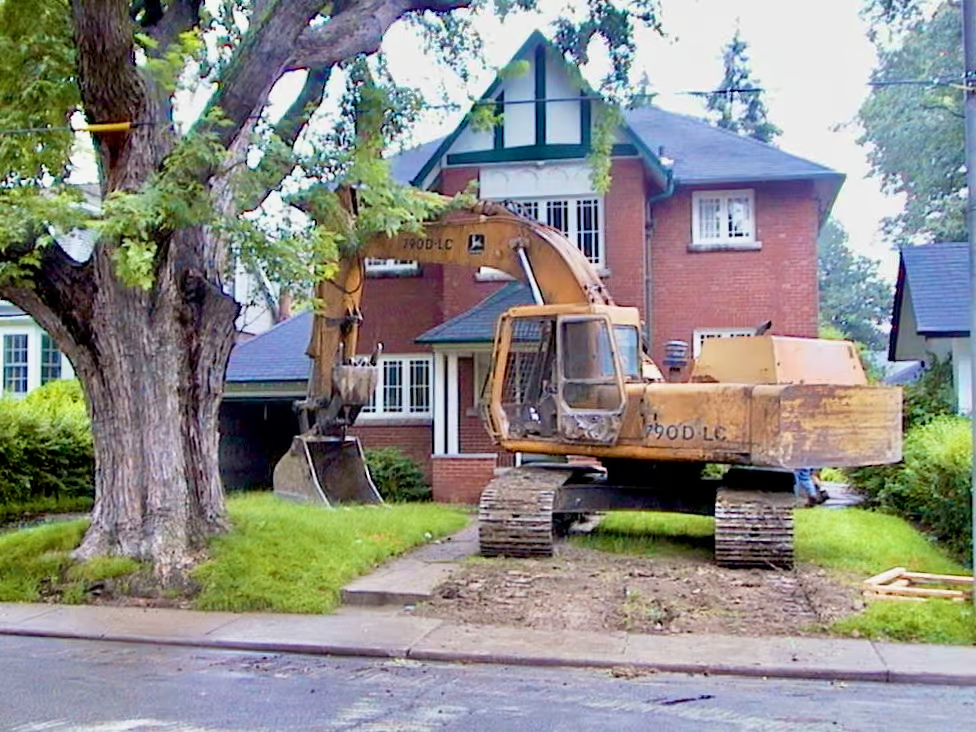
With approvals in hand, it was finally time to begin building.
Or rather, demolishing.
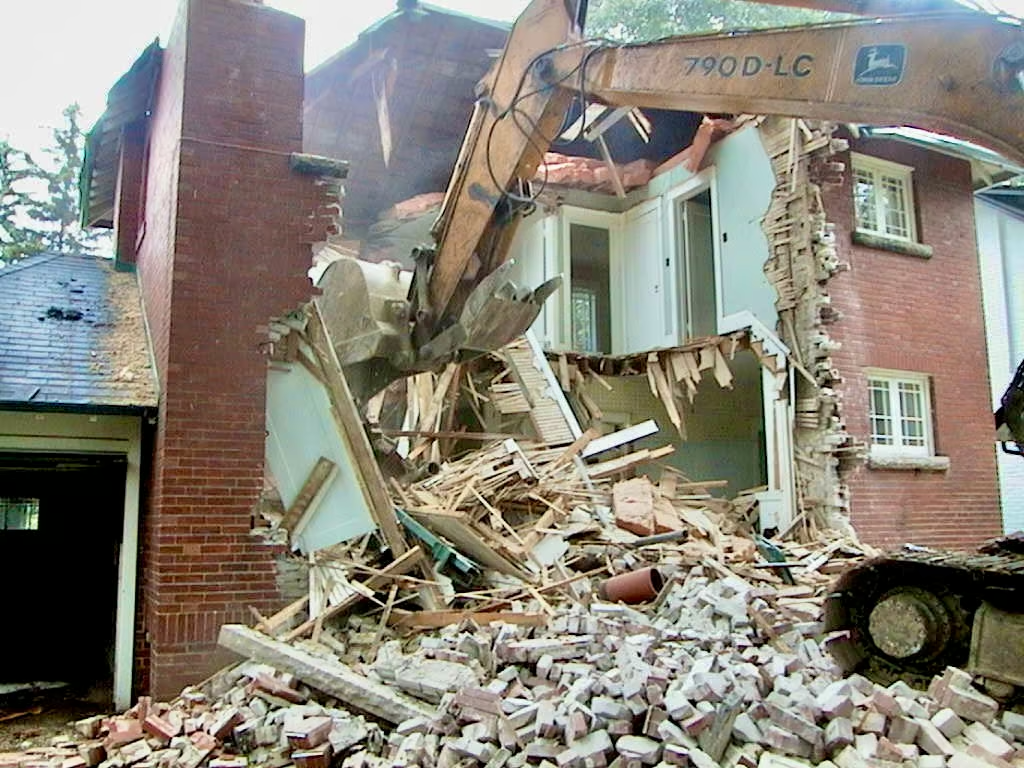

Before the excavator ever arrived, though, I discovered that people had been helping themselves to the vacant house. French doors disappeared. Copper piping vanished from the basement. Anything of value seemed fair game. It felt oddly personal, rather like returning to your parked car and finding a parking ticket under the wiper. You know it isn’t the end of the world, but somehow it still feels like an invasion.
Demolition itself was another matter entirely.
My eldest son, Shane, who was three at the time, was fascinated by construction equipment, so I took him and one of his friends to watch. We stood safely back while the excavator operator began taking the house apart. What amazed me wasn’t the machine’s power but its precision. Instead of smashing the building to pieces, he carefully peeled it apart, almost delicately, removing sections one at a time so materials could be separated for recycling before the brick walls finally came down. It was almost like watching a giant hand dismantle a model.
Then the real work began.
And with it came the surprises that every builder eventually learns to expect.
Follow along to the final part of this series and read Part 3.

Find Your Life of Luxury
Whether buying or selling a home, I can help you find your life of luxury. Get started today.