




After more than 25 years of preparing houses for sale, I’ve come to believe that the best staging doesn’t erase a home’s personality. It reveals it.
My first serious encounter with staging was around 2001, when I had completed a house on St. Leonards Avenue in Lawrence Park. Staging was hardly the ubiquitous part of Toronto real estate that it is today, and I certainly wasn’t prepared for Phyllis Newman.
Phyllis approached staging almost as theatre. She had an enormous warehouse filled with furniture, rugs, artwork, accessories and seemingly everything else required to manufacture a fully realized life inside an empty house. There were draperies, flowers, fruit, books, china, cushions and objets everywhere.
Nothing was simply placed. It was composed.
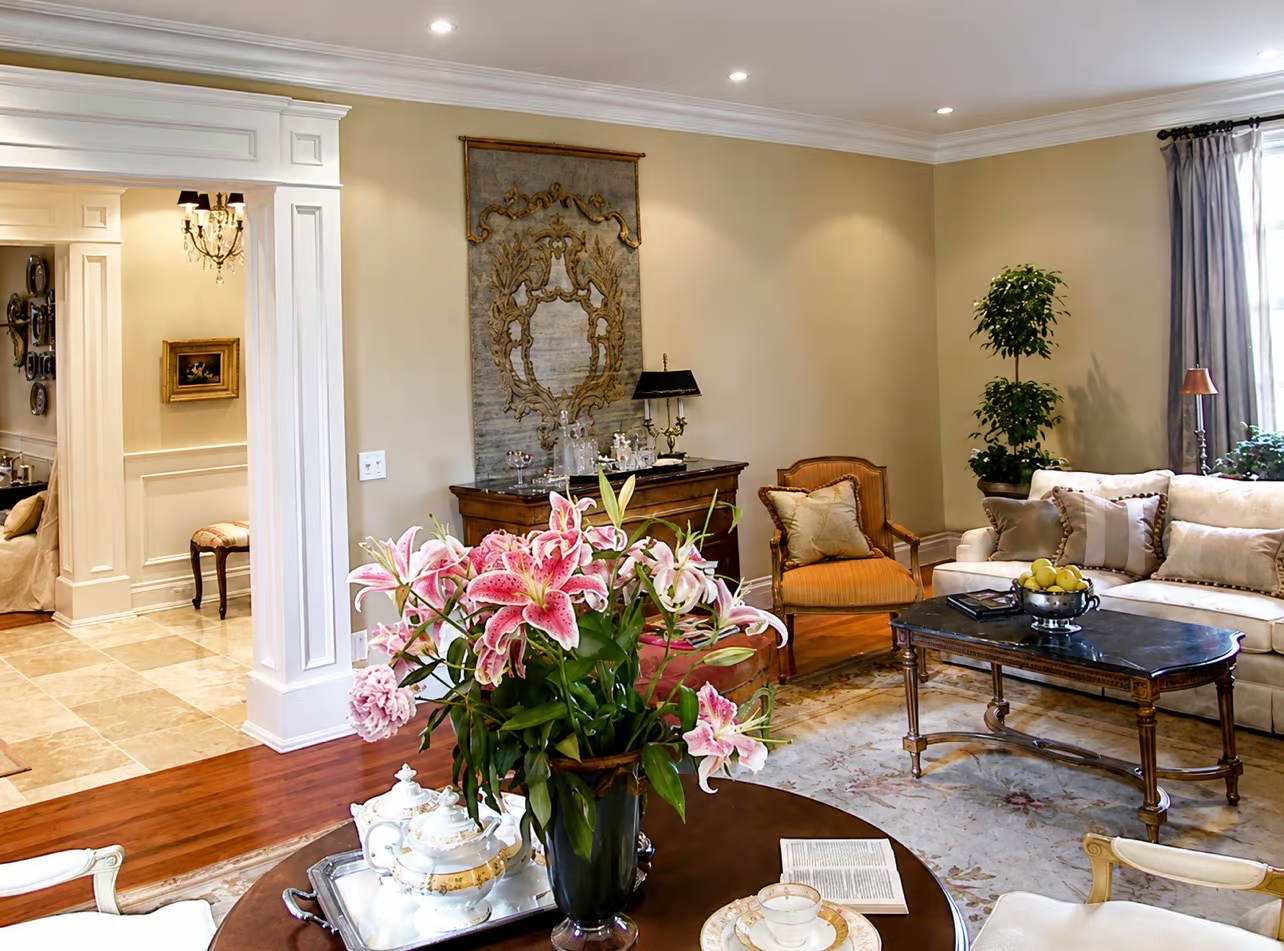
The photograph of the living room is quite wonderful to look at now. Silk draperies puddle extravagantly onto the floor. There are antiques, flowers, porcelain, bowls of fruit and an enormous plant looming into the foreground. By today’s staging standards, there is probably enough furniture and decoration in that one room to stage a small semi-detached house.
And it cost $25,000 for a month. In 2001.
I thought she had lost her mind.
Unfortunately for my argument, the house looked fabulous and sold for full price on the first day.
For more on buying and selling unique homes in Toronto, check out these posts next:
- Why Owners of Unique Homes in Toronto Hire Me To Sell Them
- What Homebuyers Need to Know About Toronto’s Distinct Architectural History
- The Most Interesting Homes in Hoggs Hollow
I Eventually Became My Own Stager
Over the years, I worked with different professional stagers, but I also began doing quite a bit myself. My background as an architect and builder probably made that inevitable. I was already accustomed to looking at rooms in terms of proportion, circulation, sightlines, colour and light. Staging became another part of the design process.
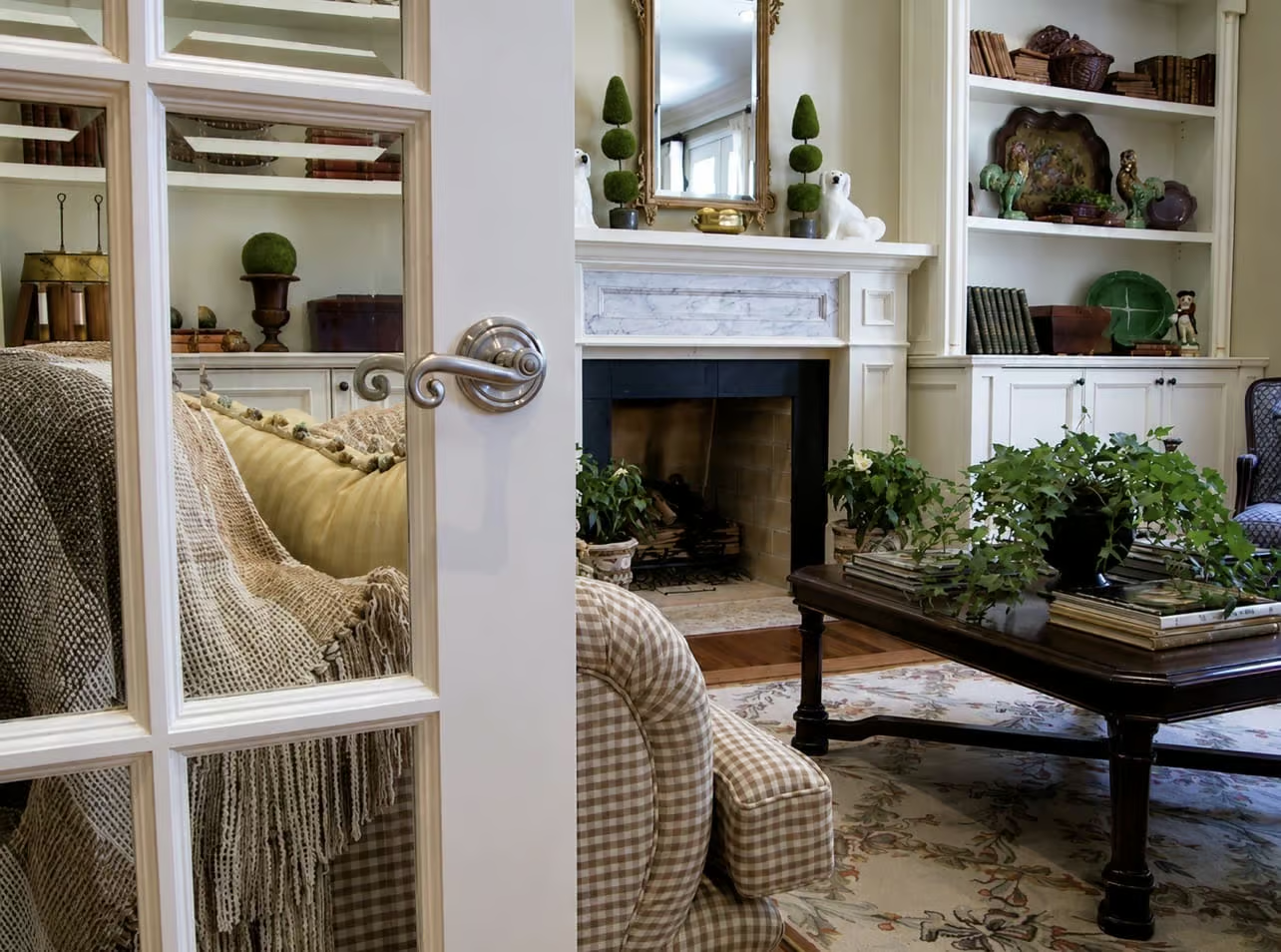
Part of that happened rather organically. IKEA, particularly in the late 2000s, was producing some genuinely clever and surprisingly good-looking furniture and accessories. I bought a collection of things that could be moved from project to project- chairs, tables, lamps, rugs and assorted objects- and combined them with a homeowner’s own furnishings.
It became a kind of travelling design kit. Sometimes I would remove two-thirds of what was in a room, rearrange what remained and bring in only a few pieces. Other times an empty room needed considerably more. Things I bought for one house later appeared in another, eventually finding their way into my own house, my children’s rooms or the cottage. Some were sold and replaced as tastes changed.
There was something rather satisfying about it. These objects had careers. More importantly, I learned that staging did not necessarily mean replacing everything. Often the best result came from editing.
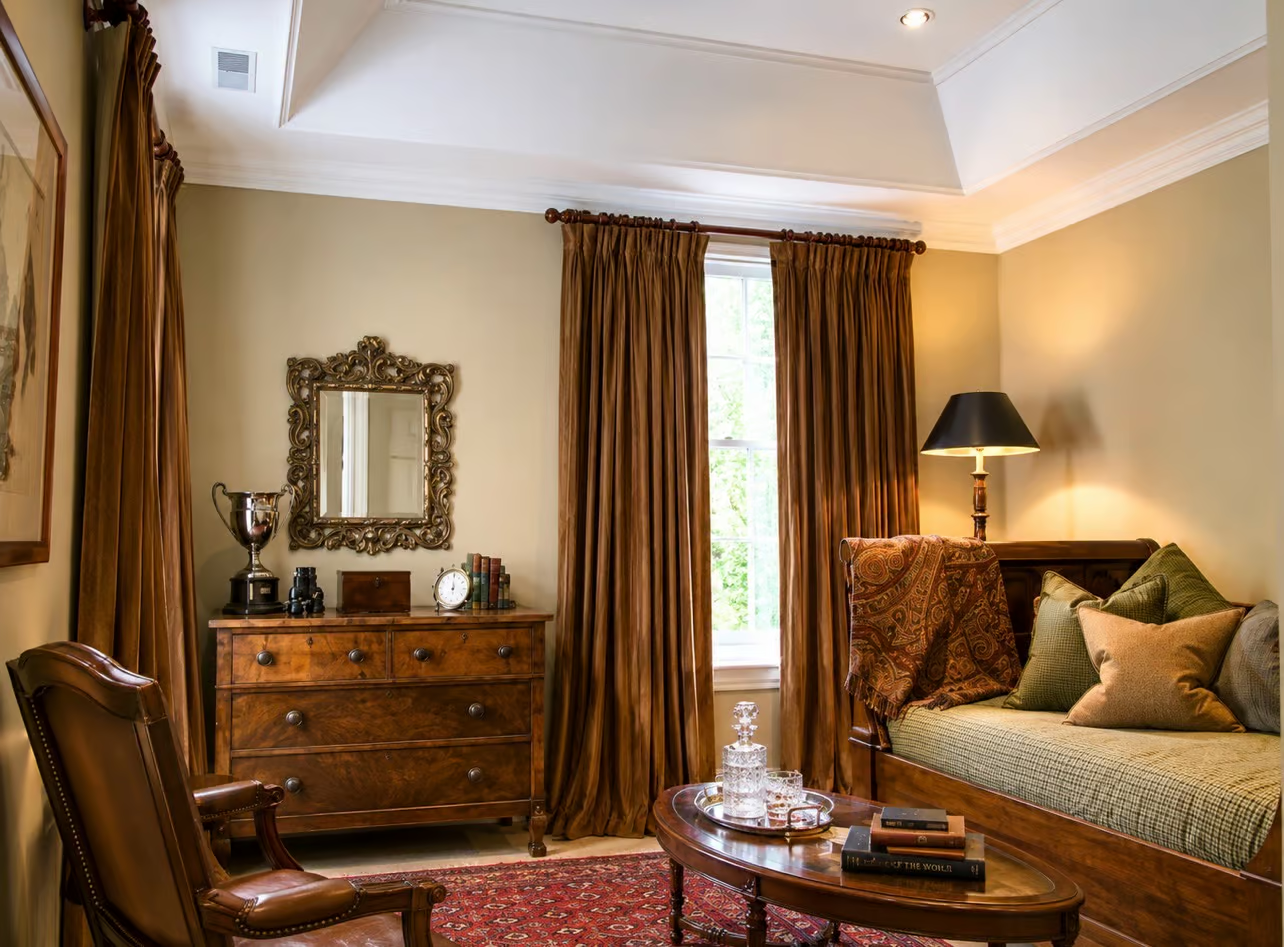
A beautiful old chair might stay. A slightly eccentric piece of art might stay. A homeowner’s table could look entirely different once everything surrounding it had been simplified. The objective was not to erase the people who had lived there and install an entirely fictitious household in their place. It was to let someone else imagine living there.
And perhaps that is where I find myself slightly at odds with some staging today.
I’ve had many years of experience renovating, designing, and even building homes. Read about some of my stories of architecture, homes, and life by design with this three-part series:
- Part One – The House that Changed Everything
- Part Two – The House that Changed Everything
- Part Three – The House that Changed Everything
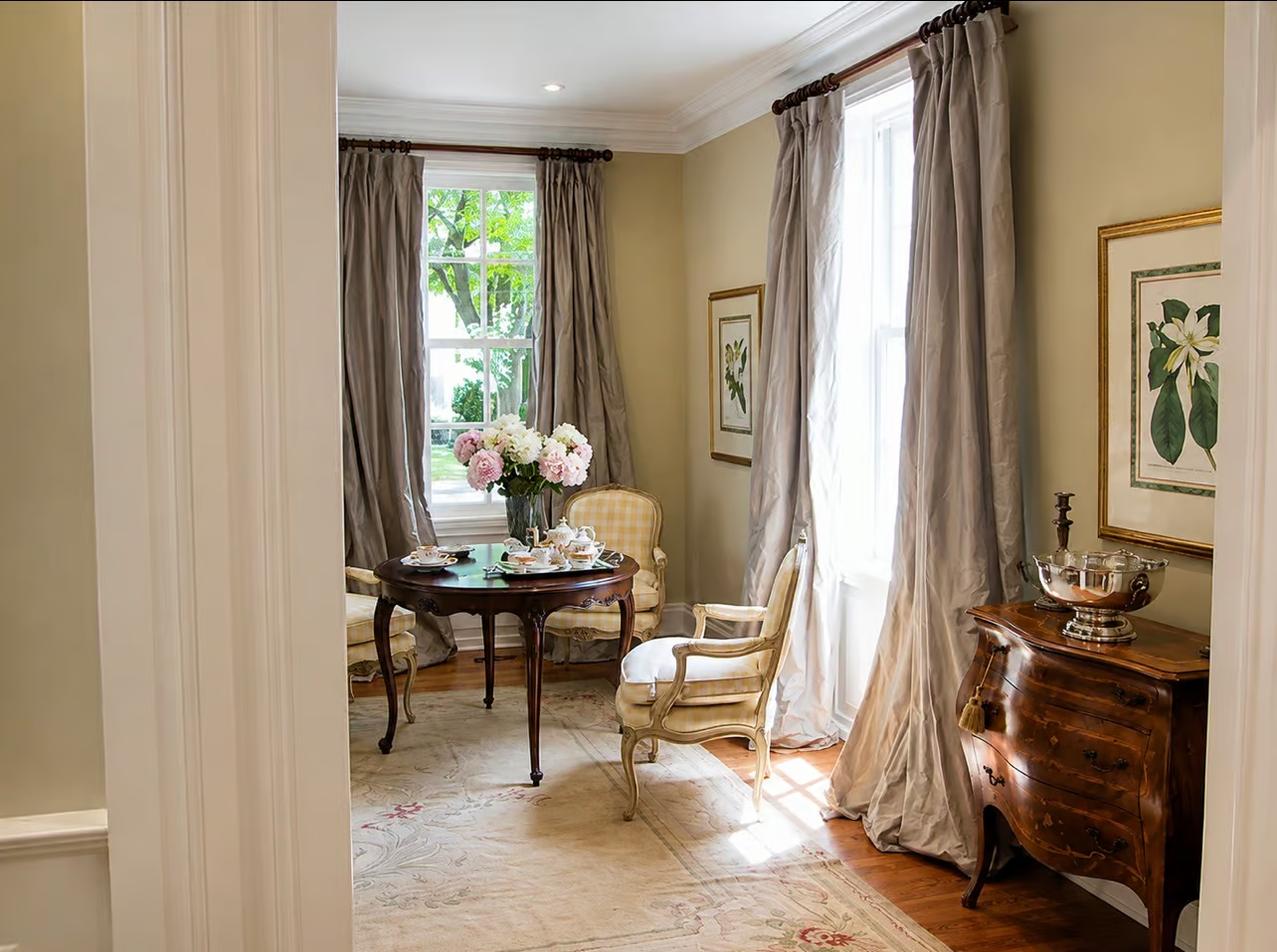
When Did Everything Start Looking the Same?
Scroll through enough real estate photographs and a peculiar sameness begins to emerge. There are the rounded beige chairs, the pale bouclé, the little black side table, the enormous ceramic vessel containing three heroic branches, a stack of books that nobody has apparently ever opened and perhaps a wooden chain sitting on top.
Everything beige, cream, black and vaguely organic.
Individually, there is absolutely nothing wrong with any of it. Some of it is very attractive. I have probably owned variations of half of it myself. The problem comes when the same visual vocabulary appears in house after house after house. Eventually you stop seeing the home and start seeing the staging inventory.
And there is another problem I notice, particularly when staging is being done by someone who may understand the objects but not necessarily the architecture. Things have to make sense.
Related Reading: How To Renovate an Older Home While Preserving its Character
Sometimes I look at a listing photograph and there is a solitary chair sitting somewhere in the corner of a room, facing absolutely nothing. I always wonder who is meant to sit there, and what exactly are they doing?
The same thing happens with entire furniture arrangements. Sofas and chairs can be assembled into what technically qualifies as a furniture grouping while bearing almost no relationship to the way anybody would actually use the room. A sofa faces a wall. Two chairs stare determinedly past one another. A lovely view sits behind everybody. The fireplace is ignored. The television, if there is one, appears to require chiropractic intervention to watch.
Occasionally I see a sofa positioned so forlornly against a blank wall that I can only picture some terribly patient old granny sitting there knitting scarves and contemplating the drywall. Furniture should have a reason for being where it is, and a room should quietly explain itself.
Where do people sit? What are they looking at? Can they talk to one another? Can they walk through the room without performing a small obstacle course? Does the furniture reinforce the architecture, or fight with it?
These are not esoteric design questions. They are simply questions about how human beings occupy space. A buyer may never consciously analyse any of this. They will simply feel that one room works and another somehow doesn’t.
This type of staging can sometimes even highlight a bad floor plan. Check out my Condo Chronicles series on my blog, where I share an architect’s perspective and proposed changes to make Toronto’s most iconic condo floor plans better.
Then there are the beds. I concede immediately that this enters the dangerous territory of personal taste. Nevertheless, I have now seen enough enormous swooping upholstered headboards, punctuated by regimented battalions of buttons, to last me quite some time.
Some of them transport me straight back to memories of Leon’s in the 1970s — that particular sort of overstuffed grandeur that always seemed destined to spend eternity beneath protective plastic covers. Perhaps somebody loves them. Fair enough. But staging is probably not the moment to impose quite that much personality.
And while we are discussing personality, there are the words. LOVE. FAMILY. WINE NIGHT. BLESSED. They appear on little signs leaning against backsplashes, dangling from walls, sitting on bathroom counters and occasionally embroidered onto cushions, just in case the house has somehow failed to communicate its emotional intentions.
I have always found these slightly baffling. If a house feels warm and welcoming, do we really require a sign to confirm that love occurs there? Does the pillow have to explain that this is where the family gathers? And if there are wine glasses sitting on the counter, I am reasonably confident a prospective buyer can deduce what might happen with them without a plaque announcing WINE NIGHT.
Perhaps it is the architect in me, but I have always thought a house should be allowed to speak for itself.
At the end of the day, we’re all looking for our own life of luxury, whatever that may look like. Here are a few more posts you might find interesting:
- Buy the Life, Not Just the House
- Why Your Real Estate Agent Should Be a Homeowner
- The Flavour of Luxury in Today’s Homes

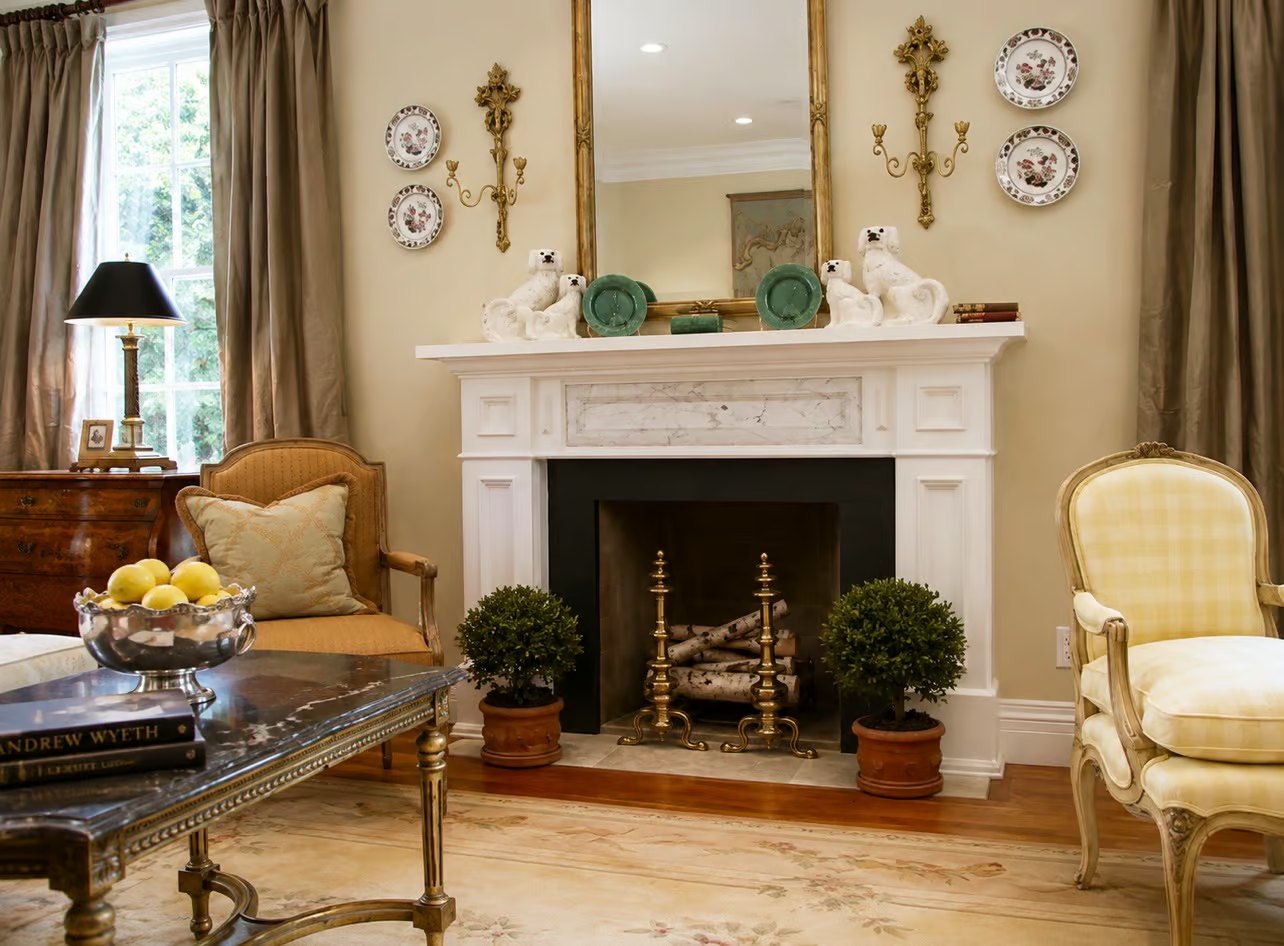

Staging Shouldn’t Be the Story
None of this means I am against staging. Quite the contrary. I have seen it transform houses. I have seen buyers react completely differently to a property after furniture was rearranged, rooms were edited, artwork was changed and the lighting was improved.
I have also seen houses where staging was absolutely necessary because the existing furniture made the rooms appear smaller, darker or considerably more dated than they actually were. But the staging should support the house. It should not become the house.
There is an important distinction between decorating for yourself and presenting a property for someone else. At home, you can indulge yourself. Paint the dining room purple. Hang twenty-seven paintings on one wall. Buy the giant buttoned headboard if it makes you happy. Put WINE NIGHT on every available horizontal surface.
It is your house.
Selling is different. You are temporarily converting a very personal environment into something that needs to communicate with people you have never met. That does not mean reducing it to a bland hotel suite. In fact, I think some of the most memorable houses retain a little personality.
An interesting piece of art. A beautiful old table. A slightly unexpected chair. Books that look as though somebody actually read them. Objects that belong together rather than objects that arrived together on a staging truck.
The trick is knowing what to leave.
Paris, Edinburgh — and Things Older Than You
I spend an inordinate amount of time looking at properties in other cities, particularly Paris and Edinburgh, and I’m continually struck by interiors that would make some North American staging consultants nervous.
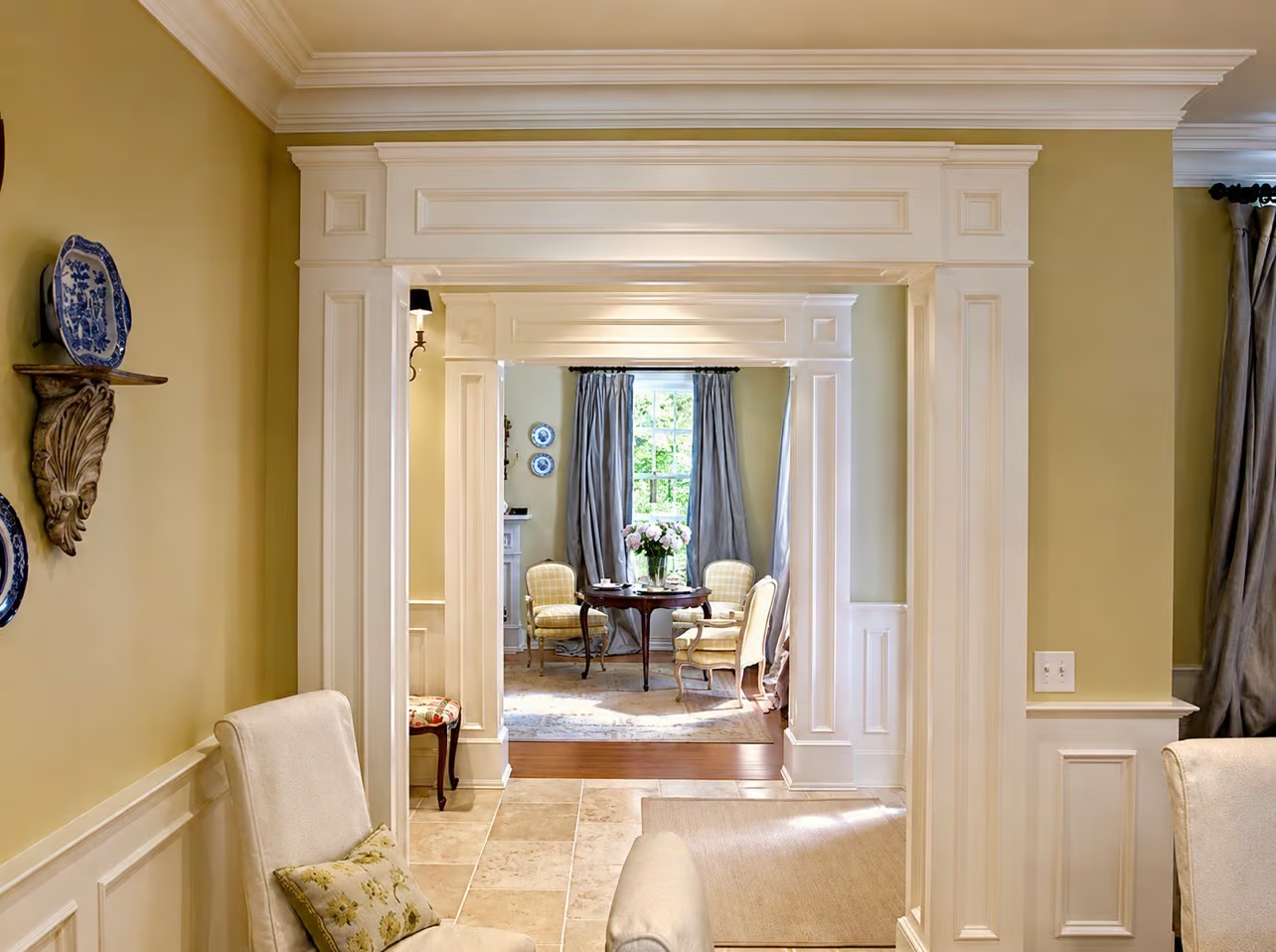
There may be a contemporary sofa beside a battered nineteenth-century table. An old portrait hangs above something resolutely modern. There are books. Real ones. Rugs don’t necessarily coordinate perfectly. Furniture comes from different periods.
Some of it has been there for generations. Some has undoubtedly been brought in for the photographs. Often it is impossible to tell which is which.
That’s the point.
The best of these interiors feel collected rather than installed. And when I encounter that quality in a Toronto listing, I’m immediately attracted to it. I suspect many buyers are too. There is an intelligence and confidence to a room that isn’t desperately trying to offend nobody.
A little history is always a good thing.
Provenance, even.
Read more about real estate influences and ideas from beyond the GTA with these posts next:
- The Best Neighbourhoods in Toronto – And Their Iconic Global Counterparts
- Two Weeks, Three Cities, and the Architecture of Feeling
- Brilliant Mid-Century Glass Architecture Meets Natural Splendour: Exploring the Roy O. Allen House
Curated Rather Than Staged
Perhaps that is the word I prefer now: curated.
A curated house still has life in it. You edit heavily, certainly. You remove the distractions. You correct the furniture arrangement. You make rooms feel generous. You improve the lighting. You simplify surfaces and make sure the buyer understands how every space might be used.
But you do not necessarily sterilize it.
Sometimes I will walk through a house with a seller and say, “Keep that.” Then, “That can go.” “Definitely keep that painting.” “Lose the chair.” “Move this upstairs.” “Take everything off this table except that.”
It is less about introducing a predetermined look than discovering the best version of the house that is already there. And occasionally, of course, you need to bring things in. I still enjoy that part.
A different lamp can transform a corner. The right rug can suddenly make a furniture grouping make sense. One good chair can be more effective than five mediocre accessories. But it has to feel as though someone might plausibly live there.
That lonely chair still needs somewhere to look.
Phyllis May Have Been Right After All
Looking back at that St. Leonard’s house more than twenty-five years later, I can smile at some of Phyllis Newman’s flourishes. The perfume bottles, the flowers, the fruit, the sheer abundance of it all. It was very much of its time, and I doubt I would stage the same house that way today.
But there was something she understood extremely well. She was creating an emotional response. Buyers were not walking through mentally cataloguing furniture. They were being seduced by the idea of the house.
That part has not changed. Staging is not really about chairs and rugs and cushions. It is about making someone walk into a room and, almost without realizing it, imagine that their life might be better there.
Everything else is just furniture.
And preferably furniture facing something.
I specialize in unique properties in Toronto’s most distinguished neighbourhoods. If you’re on the hunt for something special or you are on the hunt for the right listing agent who can see what makes your home so distinct, get in touch today! Simply fill out the form on this page, give me a call, or send me an email to get in touch.


Find Your Life of Luxury
Whether buying or selling a home, I can help you find your life of luxury. Get started today.