


There is an old real estate expression about “good bones.” It is usually uttered while standing in a room with questionable wiring, a damp-looking basement and a kitchen that last saw optimism sometime around 1987. Still, there is something to it. Some houses have an underlying quality that survives fashion, neglect, bad paint colours and the occasional unfortunate renovation. Their proportions are right, the windows are well placed, the stairs make sense, the materials have weight, and the rooms feel as though they belong to one another. They may not be glamorous, but they have presence. Others are simply old, and that distinction matters.
Old House Vs. Character Home
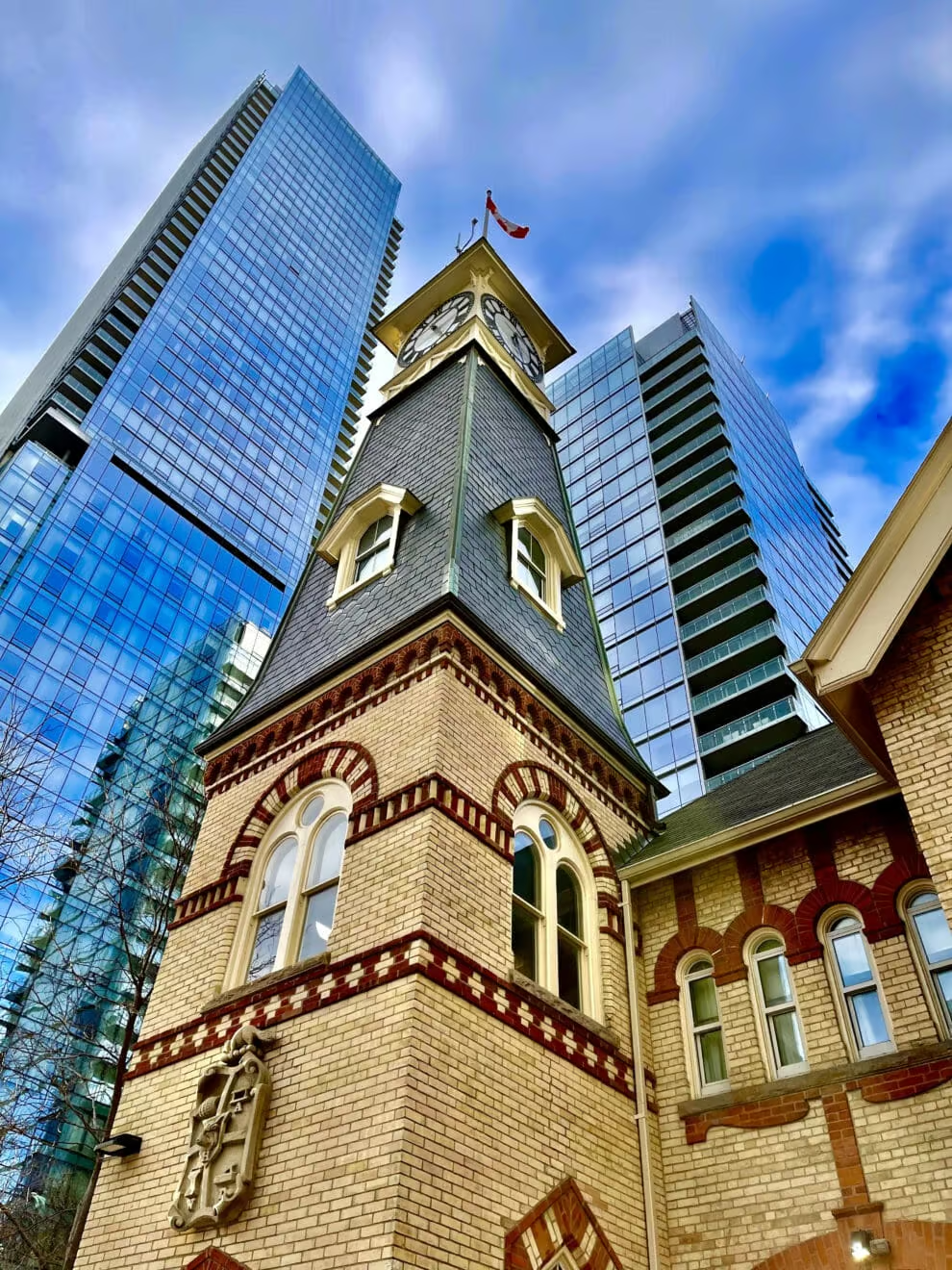
Toronto is full of houses with genuine character: Victorian rows, Edwardian semis, Arts and Crafts houses, mid-century experiments, converted industrial buildings and all manner of architectural oddities accumulated as the city grew. Many of our best neighbourhoods are compelling precisely because the houses are not all the same. The architecture has had time to settle in, and increasingly, time is something we cannot manufacture.
I learned this fairly early. Growing up in the Annex in the 1960s, my father and one of his closest friends — also an architect — were renovating their own houses only a few blocks apart. His friend lived on Tranby Avenue, in one of those wonderful 1880s row houses that eventually helped make the street one of the most desirable and distinctive in the Annex. His son was one of my best friends, so I spent a great deal of time there, playing, sleeping over and wandering through the house without realizing that I was absorbing lessons about architecture.
It’s been a lifelong journey for me that still happens to this day. For example, on a trip to Europe, I visited three cities and mused over the architecture of feeling.
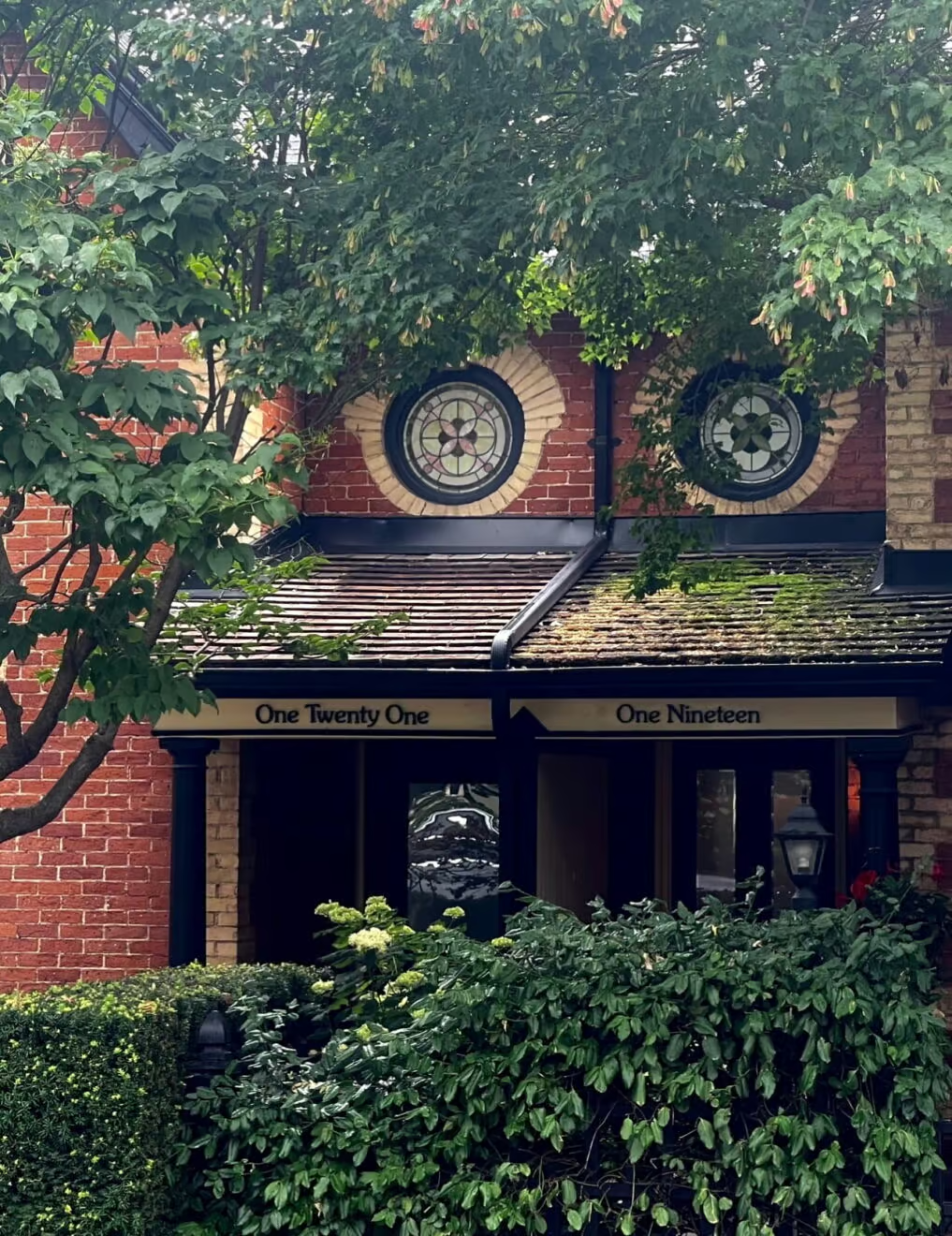
The house retained its beautiful old stained glass and much of its original character, but it was not treated as a museum piece. The interior had been modernized with a very deft hand: light woods, contemporary floating bookshelves, larger windows at the rear, a deck and a better sense of flow. I especially remember the built-in bunk beds in both my friend’s and his sister’s bedrooms. At the time, I simply thought they were incredibly cool. Looking back, they were also intelligent design. Those Tranby row houses were never intended as grand residences for nobles. They were relatively modest urban houses, narrow and efficient, yet rich in proportion and detail and capable of producing one of the best streetscapes in the city. Well-designed built-ins made the rooms work harder without pretending the house was something it was not.
That is one of the great lessons of renovating a character house…
Modernity and History Are Not Enemies
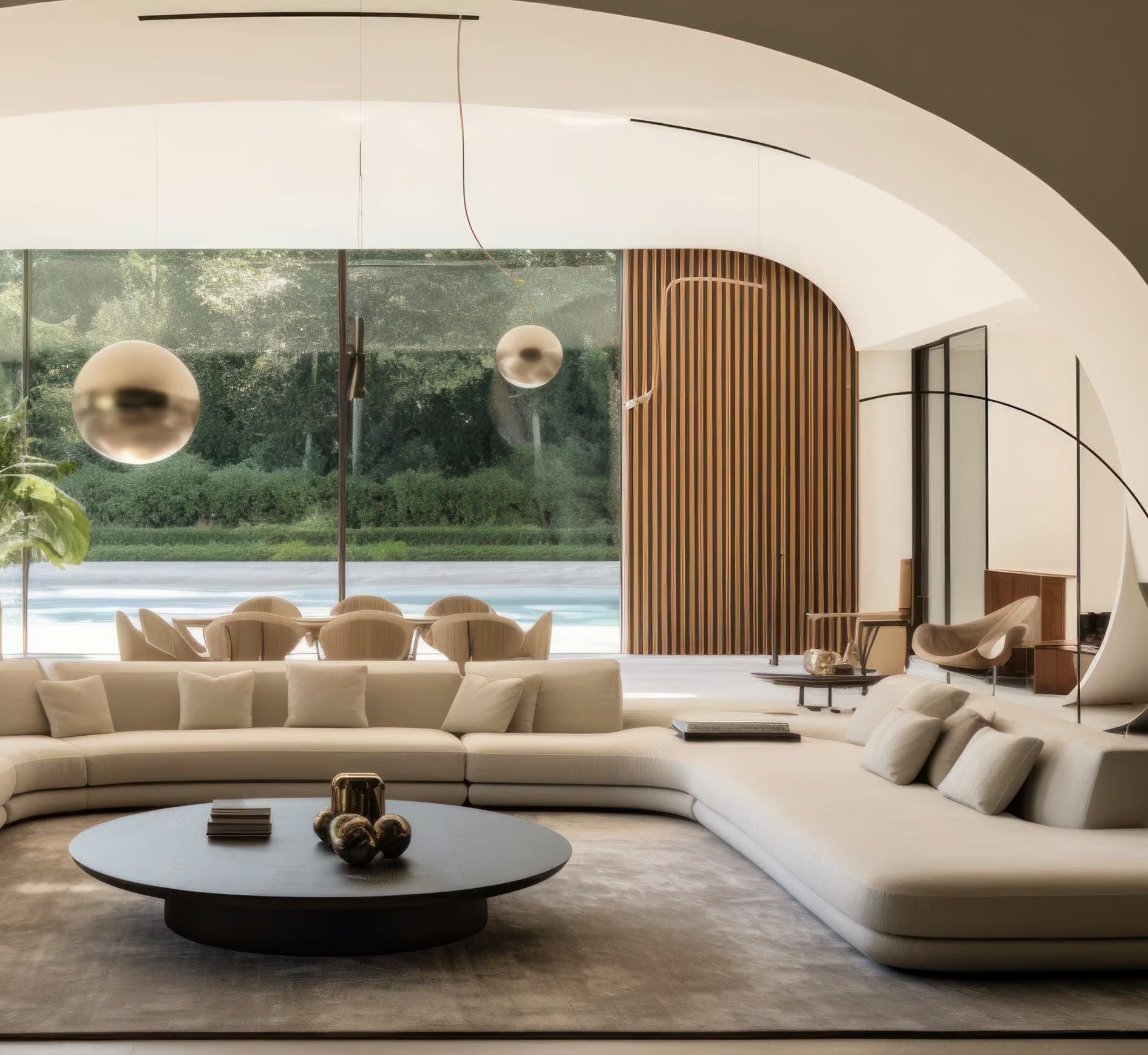
I have seen this repeatedly in New York townhouses, where historically important façades are carefully retained while the interiors become completely contemporary. When it is done well, the contrast can be extraordinary. The exterior continues to speak the language of its period while the interior belongs unapologetically to the present. Clean lines make intricate historic detailing appear even richer, and the old architecture gives the modern work a depth and context it would never have in a blank new box.
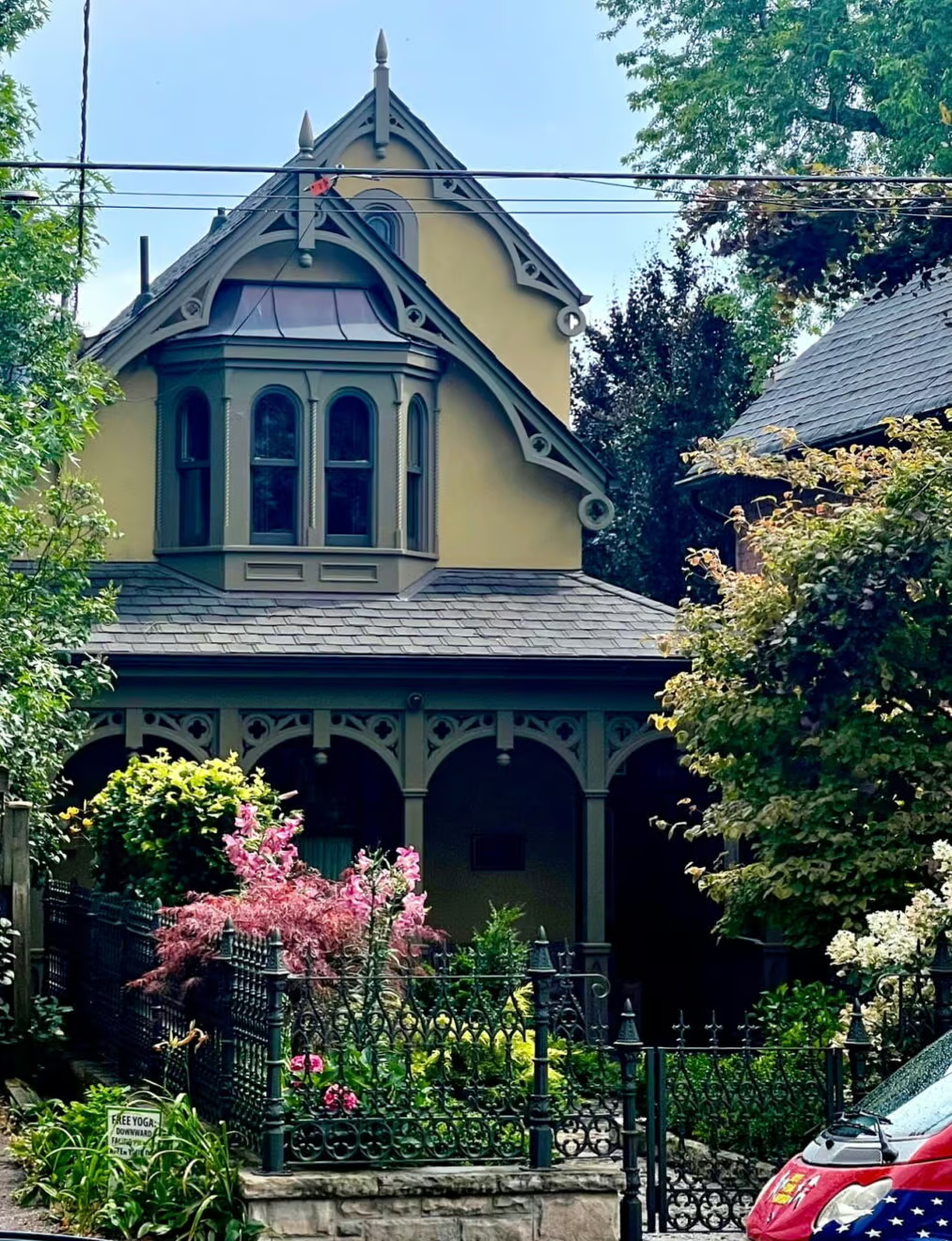
Toronto’s Victorian houses are particularly suited to this approach. A beautifully proportioned bay-and-gable façade, elaborate woodwork, stained glass and an arched window do not require every other window in the house to remain divided into a dozen little panes forever. Simple contemporary glazing can sit beautifully beside those elements. Inside, the house may become almost entirely modern, retaining perhaps a staircase, a mantel, a stained-glass panel or some exceptional millwork while allowing the rest to evolve. The success comes from understanding which elements carry the architectural identity and which ones can change.
There is a harmony in that kind of contrast. The old and new are allowed to acknowledge each other rather than one pretending to be the other. A contemporary addition does not need fake Victorian brackets to prove it belongs. Nor should a Victorian house be gutted until the only remaining clue to its history is the brick façade visible from the street. The best renovations have enough confidence to let each period speak in its own voice.
See an example of this at the beautiful 18 India Street in Edinburgh’s historic Old Town.
I Experienced the Opposite Lesson…
And rather painfully, with my parents’ later house. It was a mid-century modern house with a very particular architectural identity — in many ways more California than Ontario — sitting in a very unique and special neighbourhood. After it was sold, just a few years ago, the new owner applied a collection of familiar renovation clichés and gradually stripped away virtually everything that made the house distinctive. What had once been coherent became generic. It may technically have been “updated,” but architecturally it was diminished.
Within a couple of years, a friend sent me an Instagram post from someone who featured unfortunate transformations of interesting houses across North America. Somehow my parents’ house had been found. Seeing it there was shocking, but oddly heartwarming too, because somebody with no personal connection to the house had looked at the old photographs from when I listed it for sale and understood exactly what had been lost. There was some consolation in discovering that the architectural offence had independent witnesses.
Older doesn’t always mean better, but if you’ve been reading my blog for a while, you may have noticed a definite partiality to things with an aged charm. Here are a few more posts so you can see what I mean:
- Is it Wrong to Like Older Homes? Or are they Actually Better?
- They Don’t Make Them Like They Used To: Pros and Cons of Modern Houses
Age Does Not Equal Greatness
Of course, we should not romanticize every old house simply because it predates central air conditioning. Age alone does not confer greatness. Some houses are historically important; some are beautifully proportioned; some have craftsmanship worth preserving. Others are merely old, and some have accumulated generations of alterations that were questionable the first time around. Fake beams, oversized reproduction mouldings and “heritage” kitchens inspired more by a steakhouse than by architectural history do not become precious merely through familiarity.
That is where judgement becomes important. A buyer may walk into an older house and see dated finishes. An architect may instead be looking at ceiling height, window proportion, structure, orientation, circulation and the opportunities for light. Conversely, a buyer can be dazzled by acres of new stone and freshly installed cabinetry while someone trained in design quietly wonders why so much money was spent making the house worse.
Old Houses Have Quirks
There is also the less romantic side of character houses: the invoices. Wonderful old brick can require repointing. Original windows may be beautiful but inefficient. Knob-and-tube wiring can still be lurking behind the plaster. Plumbing ages, roofs sag, floors slope and old basements were generally not designed with the expectation that one day they would contain gyms, wine rooms, guest suites and televisions the size of garage doors. The phrase “while we’re at it” has probably funded more construction than any bank in Canada.
None of this is an argument against buying an older house. It is an argument for understanding what you are buying. There is a considerable difference between cosmetic updating, deferred maintenance and major structural intervention. A dated bathroom is one thing; underpinning, rewiring, new mechanical systems, windows and a substantial addition are something else altogether. Buyers sometimes fall in love with the front hall and mentally renovate everything behind it for $150,000. It is a lovely thought. It can also be wildly fictional.
Good bones and bad systems can coexist quite happily for decades. A house can be architecturally excellent and mechanically exhausted. It can have beautiful proportions and terrible plumbing, wonderful windows and almost no insulation. It can be worth preserving and expensive to preserve at exactly the same time. Character does not exempt a property from economics.
Having bought, renovated, and built homes in the past, I’m deeply familiar with this. Read my 3-part renovation story for more.
Signs of a Successful Reno
For me, one of the most important qualities in a successful renovation is restraint. The temptation is always to make everything new, when the more intelligent question is whether everything needs to be new. A good floor may only need refinishing. A beautiful staircase may deserve restoration even if replacement would be easier. An original stained-glass window may contribute more to the character of the house than an enormous new sheet of glass ever could. At the same time, the kitchen might become completely contemporary, the rear wall might open dramatically to the garden, and a new addition might make absolutely no attempt to impersonate 1890.
That combination can be wonderful. The old part remains honest, the new part remains honest, and the transition between them becomes part of the architecture. That was what I remember so clearly about the Tranby house: it was old and modern at the same time, and neither side apologized for the other.
New interventions can even become part of a house’s character. A beautifully designed door, a contemporary rear addition, an elegant built-in or a thoughtfully conceived garden element may be entirely new but still feel inevitable once it is there. Character is not necessarily frozen at the moment a house was built. Some of the most interesting homes acquire layers over generations, with evidence of different periods, different owners and different ways of living. Done well, those layers make the house richer rather than confused.
There is a real estate implication as well. Character houses do not necessarily appeal equally to everyone. A conventional renovated house may attract a broad pool of buyers who all think it is perfectly nice. A highly individual house may appeal to fewer people, but the right buyer can respond to it much more intensely. That creates some risk in a slower market, but it can also create something ordinary houses rarely achieve: emotional attachment.
Real estate sometimes rewards consensus. Sometimes it rewards obsession.
An Older Home is Always Part of a Bigger Picture
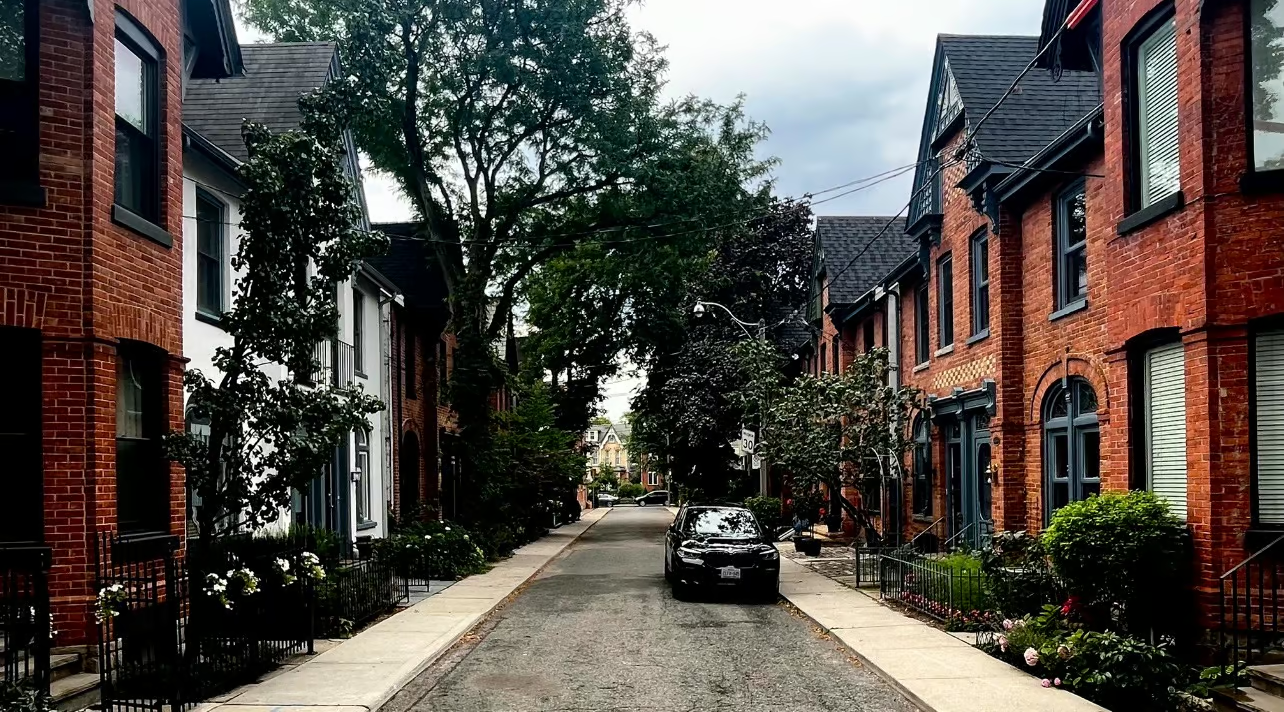
The street matters too. One of the reasons neighbourhoods such as the Annex, Cabbagetown, Rosedale and parts of Leslieville remain so compelling is that their buildings work collectively. You are not simply buying one house; you are buying into a streetscape of setbacks, porches, rooflines, trees, materials and proportions that have accumulated over decades. Tranby Avenue is a perfect example. The individual houses are charming, but their greater power comes from what they create together.
Excellent new architecture can certainly create wonderful places, but there are some qualities that cannot be accelerated. You cannot manufacture 140 years of context by Thursday.
Hoggs Hollow holds a special place in my heart, in part, for this reason. Join me on a walk through the neighbourhood and a tour of Hoggs Hollow’s most interesting houses.
So, Should You Buy a Character House?
Absolutely, if you understand what you are buying. Buy it because the architecture moves you, because the proportions feel right, because the stained glass makes you stop, or because the staircase has a presence that no amount of newly installed millwork can reproduce. Then look at it again with colder eyes. What needs replacing? What should be preserved? What could be improved? What has already been compromised? What will it cost to make the house work for the way you want to live today?
And perhaps the most important question is not whether you can make the house newer.
It is whether you can make it better.
A character home can be enormously rewarding because it offers something architecture cannot always provide on demand: memory, texture, quirks, history and a sense that life has already happened there. Owning one means becoming part of that history for a while.
Ideally, you leave it better than you found it.
And, at the very least, try not to become the “after” photograph on Instagram.
Whether you’re in the market to buy or sell an older home, there are definite benefits to working with an architect real estate broker. I’d be happy to chat further.
Get in touch with me today via the form on this page or by calling / emailing me directly.

Find Your Life of Luxury
Whether buying or selling a home, I can help you find your life of luxury. Get started today.